

Our Family Has Given A Voice To The Injured For Over 50 Combined Years
Newark Commercial Vehicle Accident Lawyers
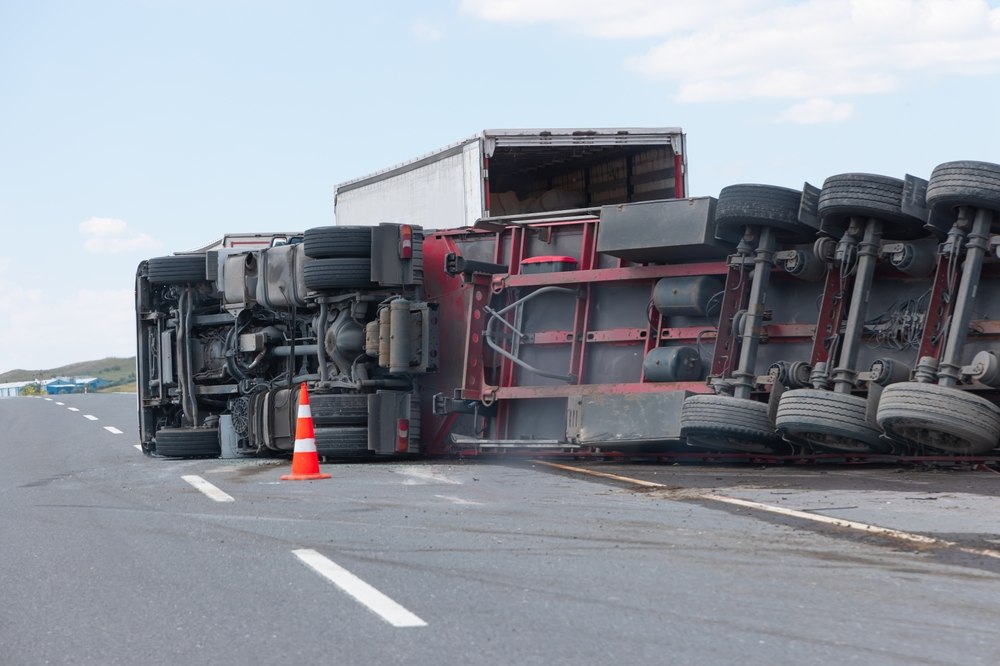
If you were hit by a delivery van, company truck, or another vehicle being used for work, you may be dealing with more than a standard car accident claim. The driver may not be the only party responsible, and the insurance information listed on the police report may not tell the full story.
Commercial vehicle crashes can involve different insurance policies, employer-liability issues, and state or federal regulations depending on the vehicle and how it was being used. A delivery van, company car, box truck, contractor vehicle, and tractor-trailer can each raise different questions about who is responsible and which insurance coverage applies.
Goldstein & Goldstein, LLP is a family-owned personal injury firm that has served Essex County from East Orange since 1997.
Our Newark commercial vehicle accident attorneys focus on three questions early in the case: who was driving, who employed or contracted with the driver, and which insurance policies may provide coverage.
Answering those questions can uncover commercial insurance or employer liability that is not obvious from the police report or the driver’s personal insurance information.
If you were injured in a commercial vehicle crash in Newark or elsewhere in Essex County, call our East Orange office to talk through what happened. We offer free consultations in English, Spanish, and Haitian Creole.
Who Is Goldstein & Goldstein, and Why Does This Case Type Fit Us?
Goldstein & Goldstein, LLP is a family-owned personal injury firm founded in 1997, run by father-and-son partners Richard and Michael J. Goldstein.
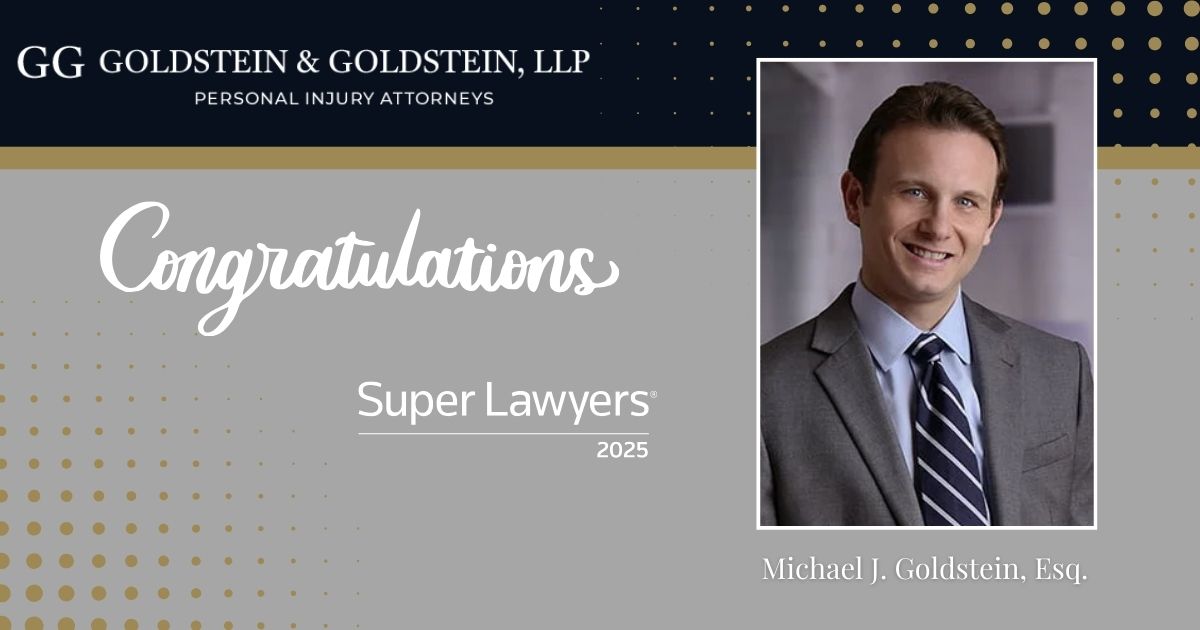 Michael is a New Jersey Supreme Court Certified Civil Trial Attorney, a designation held by a small percentage of NJ attorneys. Between our four attorneys, we bring more than 50 combined years of practice to Essex County injury cases.
Commercial vehicle cases suit us for a specific reason. When a delivery driver hits you in a rideshare or a personal vehicle, personal injury protection (PIP) benefits may run out fast or may not apply at all.
Our established treating-doctor network keeps clients getting real medical care while the liability fight plays out. That matters when the at-fault carrier is stalling and your own PIP is thin or unavailable.
We are in East Orange, and we practice across:
- Essex County (Newark, East Orange, Orange, Irvington, Bloomfield, Montclair)
- Union, Hudson, and Passaic County matters when they cross jurisdictions
- Federal court when a national carrier removes a case
- Notice claims against municipalities and state agencies
A boutique firm offers direct partner involvement, from the initial consultation through trial.
What Counts as a Commercial Vehicle Accident in New Jersey?
A commercial vehicle accident in New Jersey involves any motor vehicle being used for business purposes at the time of the crash, other than a passenger car being used only for a personal errand.
The category is broader than most people think and much broader than tractor-trailer trucking cases.
Our commercial vehicle accident practice covers vehicles that share Essex County roads every day:
- Last-mile delivery vans operating for Amazon, FedEx, UPS, DHL, and OnTrac
- Box trucks and cube vans used by contractors, movers, and food distributors
- Company cars driven by sales reps, field techs, and property managers
- Contractor pickups pulling ladders, tools, or landscaping trailers
- Municipal vehicles including sanitation trucks, DPW pickups, and transit buses
The classification of the vehicle drives which insurance policy applies and which legal theories may hold the employer responsible. That analysis often determines whether a claim reaches a small personal auto policy or a large commercial one.
Failing to identify the vehicle’s business use, ownership, driver relationship, and available coverage can leave important sources of compensation unexplored.
Who Is Legally Responsible When a Company Vehicle Causes a Crash?
Responsibility for a company vehicle crash, much like a standard Newark car accident, usually falls on the driver, the employer, or both, depending on the driver’s status and what they were doing when the crash happened.
New Jersey recognizes a doctrine called respondeat superior, which means an employer may be held liable for the negligent acts of an employee committed within the scope of employment.
When Respondeat Superior Applies
 Respondeat superior applies when the driver was an actual employee performing job duties at the time of the crash. A UPS driver making a scheduled stop on Central Ave is inside the scope of employment.
A company salesperson driving to a client meeting in Newark is inside the scope. A field technician detouring to grab lunch may or may not be, and that gray area is where cases get fought.
The Independent Contractor Defense
The independent contractor defense is the reason delivery fleets are so hard to sue directly. Amazon, FedEx Ground, and similar carriers structure their delivery networks through independent service providers or contracted drivers, then argue those drivers are not their employees.
If the defense succeeds, the injured person is left chasing a small contractor’s insurance policy instead of a national carrier’s coverage.
We push back on that defense using the factors New Jersey courts consider, including control over the driver’s work, equipment, working relationship, and other circumstances bearing on employee or agency status.
Negligent Hiring, Training, and Supervision
An employer may also be directly liable if it hired a driver with a suspended license, skipped required training, or ignored a pattern of complaints. These claims live or die on subpoenaed personnel records, which is why preservation letters must go out early.
How Do Commercial Insurance Policies Change What You Can Recover?
 Commercial insurance policies typically carry higher limits and different exclusions than personal auto policies, which changes both the claim strategy and the tactics the carrier uses.
A standard New Jersey auto policy issued or renewed in 2026 generally carries at least $35,000 per person and $70,000 per accident in bodily injury liability coverage. A commercial policy on a delivery fleet vehicle often carries $1 million or more.
Higher limits do not mean easier claims, which is why understanding insurance dos and don’ts matters even more here. Commercial carriers assign senior adjusters, rapid-response investigators, and defense counsel within days.
They send someone to the scene while the vehicle is still there. They start building the case against you before you have finished your first ER visit.
| Vehicle Type | Typical Policy Limit | Common Defense Strategy | Employer Liability Path |
|---|---|---|---|
| Personal car used for work errand | $35,000–$100,000 bodily injury | Deny scope of employment | Respondeat superior if on-duty |
| Amazon/FedEx contractor van | $1 million+ | Independent contractor defense | Control-based liability argument |
| Company-owned box truck | $1 million–$5 million | Dispute driver negligence | Direct employer liability |
| Municipal vehicle | Governed by NJ Tort Claims Act | Immunity and notice defenses | Notice within 90 days required |
| Contractor pickup with trailer | Varies widely | Blame subcontractor | Depends on trade relationships |
The policy analysis is not a footnote. It shapes the entire claim strategy from day one.
What Should You Do After a Delivery Truck or Box Truck Crash in NJ?
After a delivery truck or box truck crash in NJ, get medical attention, document the vehicle’s markings, and contact a lawyer before speaking with the commercial carrier’s adjuster.
Delivery fleet cases move fast on the defense side, and evidence disappears within days if no one preserves it.
Once you are home and stable, these steps protect your claim:
- Photograph every logo, DOT number, and license plate visible in your accident photos
- Save the delivery driver’s name and any package or route information you saw
- Keep receipts for rideshares, prescriptions, and time off work
- Write down the names of witnesses who stopped at the scene
- Request a copy of the police report from the responding department
Delivery vans and box trucks often have inward-facing and forward-facing cameras. That footage may exist for as little as 72 hours before it cycles over.
A litigation hold letter sent to the carrier within the first week may preserve video that becomes important evidence months later.
What Deadline Applies If a Municipal Vehicle Caused the Crash?
 A 90-day notice deadline applies when a municipal or public entity vehicle causes a crash in New Jersey, under the New Jersey Tort Claims Act. Miss it and the claim is likely barred, regardless of how serious the injuries are.
The deadline matters in East Orange, Orange, Irvington, and Newark because municipal fleets are on the road constantly.
Sanitation trucks running early morning routes, DPW pickups on pothole crews, and NJ Transit buses on the 25 and 34 lines all fall under this rule. So do vehicles operated by county agencies and state departments.
The ordinary two-year statute of limitations does not replace the 90-day notice requirement. In limited circumstances, a court may permit a late notice within one year of accrual if the claimant meets New Jersey’s statutory requirements.
A properly drafted notice of tort claim identifies the entity, the date and location, and the nature of the injuries. Sending it to the wrong department or leaving out a required element may sink a case that had real value.
What Evidence Matters Most in a Commercial Vehicle Case?
Telematics data, dispatch records, driver logs, and internal safety records may become some of the most important evidence in a commercial vehicle case.
A New Jersey commercial vehicle accident lawyer who gets involved early has time to lock these records down before they vanish.
Key preservation targets include:
- GPS and telematics data showing speed, braking, and route deviation
- Dashcam and cargo-area video from the truck or van
- Dispatch and delivery logs matching the crash to a specific driver and route
- Maintenance and inspection records for the vehicle
- Driver qualification files, prior incident reports, and training records
Getting these records usually requires a formal preservation letter followed by targeted discovery once suit is filed.
The Federal Motor Carrier Safety Administration sets retention rules for certain commercial vehicles, though last-mile delivery vans often fall outside those rules, which is why speed matters.
The New Jersey Motor Vehicle Commission maintains registration and title records that may help identify the responsible business entity when the vehicle carries no visible branding.
FAQs for Commercial Vehicle Accident Lawyers in NJ
Does it matter if the delivery driver was an Amazon Flex driver instead of a regular Amazon employee?
Yes, it matters, though it does not end the case. Amazon Flex drivers are classified as independent contractors, which Amazon uses to distance itself from liability.
A claim may still reach Amazon’s commercial coverage through control-based arguments, and Amazon maintains a commercial auto policy that applies during active deliveries in many situations.
Can I sue if the company vehicle that hit me was a rental?
Generally yes, though the responsible party depends on who rented the vehicle and why. The renting company, its driver, and sometimes the rental agency itself may share responsibility.
The federal Graves Amendment limits rental company liability in many situations, but the business that rented the vehicle for its employees usually remains fully exposed.
What if the company vehicle had no visible logo or markings?
You may still have a claim, but proving the vehicle was being used for business at the time of the crash becomes the fight. Unmarked company cars are common for sales reps, property managers, and contractors.
Registration records, employer statements, and the driver’s own testimony often establish commercial use even without exterior branding.
Is a workers’ compensation claim my only option if I was hurt in a company vehicle while working?
Not usually. If you were injured while driving for your own employer, workers’ compensation is often the exclusive remedy against that employer.
However, a third-party claim against another negligent driver, vehicle owner, or maintenance contractor may run alongside the comp claim and provide additional recovery.
Do commercial vehicle accident claims settle faster or slower than regular car accident claims?
Generally slower, though higher policy limits and multiple layers of coverage may make the claims more complex. Aggressive defense work, multiple insurers, and employer-liability disputes take time to sort out.
A well-documented claim with clear liability and serious injuries may still resolve within a year, while contested employer-liability cases may run longer.
How much does a commercial vehicle accident lawyer NJ charge?
Our firm handles commercial vehicle cases on contingency, which means no fee unless we recover money for you.
Costs of the case are advanced by the firm and repaid from the recovery. There is no charge for the initial consultation, and no obligation if you decide not to move forward.
Talk to a New Jersey Commercial Vehicle Accident Lawyer About Your Case

Richard Goldstein, Commercial Vehicle Accident Lawyer
Evidence can disappear quickly after a commercial vehicle crash. Dashcam footage may be overwritten, telematics data can be deleted, and witnesses may forget important details.
A New Jersey commercial vehicle accident lawyer who gets involved early can identify and preserve key evidence while it is still available.
Michael and Richard Goldstein personally review commercial vehicle cases and can identify the employer-liability and insurance issues that need investigation.
Bring the police report number, vehicle photos, and anything you remember about the driver. Our East Orange office offers intake in English, Spanish, and Haitian Creole, with no fee unless we recover compensation for you.
