

Our Family Has Given A Voice To The Injured For Over 50 Combined Years
NJ PIP Coverage Explained: Medical Benefits and Your Right to Sue for Pain and Suffering
Quick Answer: What is PIP coverage in New Jersey, and how can it affect your right to sue for pain and suffering?
Personal Injury Protection, or PIP, is New Jersey’s no-fault auto coverage that pays covered accident-related medical expenses for eligible insureds regardless of who caused the crash. New Jersey Standard Policy holders choose between the Limitation on Lawsuit option, often called the verbal threshold, and the No Limitation on Lawsuit option, under N.J.S.A. 39:6A-8. Basic Policies include the Limitation on Lawsuit option.
New Jersey drivers make decisions at policy signup that most never think about again, and those decisions quietly control what happens if they get hurt in a crash.
Getting NJ PIP coverage explained in plain language matters because the fine print on a New Jersey auto policy is unusually consequential.
The choices made when buying a policy determine how much PIP medical coverage is available, what deductible applies, and whether the policy limits the right to recover damages for pain and suffering.
Understanding how PIP and the lawsuit options work together can help you see what your policy covers and what rights you may have after a crash.
Key Takeaways About NJ PIP Coverage
- PIP pays covered accident-related medical expenses for eligible insureds regardless of who was at fault in the crash.
- New Jersey Standard Policy holders choose between the verbal threshold and the No Limitation on Lawsuit option, and Basic Policies include the Limitation on Lawsuit option.
- The verbal threshold allows pain-and-suffering claims only when the injury fits one of six statutory categories.
- Uninsured and underinsured motorist coverage protects you when the at-fault driver has no insurance or too little.
- Rideshare passengers and motorcyclists face coverage rules that differ from standard auto policies.
How Does PIP Work in New Jersey?
 PIP generally pays covered accident-related medical expenses for eligible insureds and other covered persons after a New Jersey car crash, regardless of who caused it.
Personal Injury Protection is the no-fault portion of a New Jersey auto policy under N.J.S.A. 39:6A-4, and for Basic Policies under N.J.S.A. 39:6A-3.1. It may cover ambulance transport, hospital care, follow-up treatment, imaging, and physical therapy up to the policy limit.
Fault Does Not Control PIP
An eligible driver can receive PIP benefits under their own coverage even if they caused the crash. No-fault means the coverage responds regardless of who caused the collision, subject to the deductible and copayment.
This is one of the most misunderstood features of New Jersey auto insurance, and it is why drivers who feel responsible for a crash sometimes skip care they were entitled to seek.
What PIP Covers and What It Does Not
PIP covers medical expenses and some related costs, but it has limits worth knowing before a crash rather than after. Common PIP features include:
- Coverage limits that vary by the option selected at signup
- A deductible and copayment that apply before benefits begin
- Optional coverage for lost income depending on the policy
- Exhaustion of benefits before treatment is complete on serious injuries
- Coverage that generally follows the person, subject to policy terms
PIP does not pay for pain and suffering. That category of recovery depends on a separate part of New Jersey law, which is where the verbal threshold decision comes in.
What Is the Verbal Threshold in New Jersey?
The verbal threshold is a New Jersey auto insurance option that limits the right to sue for pain and suffering unless the injury meets specific legal categories.
New Jersey Standard Policy holders choose between the Limitation on Lawsuit option, often called the verbal threshold, and the No Limitation on Lawsuit option, under N.J.S.A. 39:6A-8. Basic Policies include the Limitation on Lawsuit option.
The Two Options and What They Cost
The two lawsuit options trade premium savings against legal rights. The Limitation on Lawsuit option lowers the premium but restricts pain-and-suffering claims to qualifying injuries.
The No Limitation on Lawsuit option costs more but does not impose the six-injury threshold on a claim for pain and suffering. NJDOBI identifies the Limitation on Lawsuit option as the option most drivers choose, in part because it lowers the cost of coverage.
Why the Choice Matters After a Crash
The lawsuit option selected at signup controls part of the case long before any crash happens. \
A Standard Policy holder who selected the verbal threshold and suffers a soft-tissue injury that does not meet a statutory category may recover medical costs through PIP but may not recover for pain and suffering.
The option that saved money on the premium becomes the option that limits that part of the claim.
Which Injuries Meet the New Jersey Verbal Threshold?
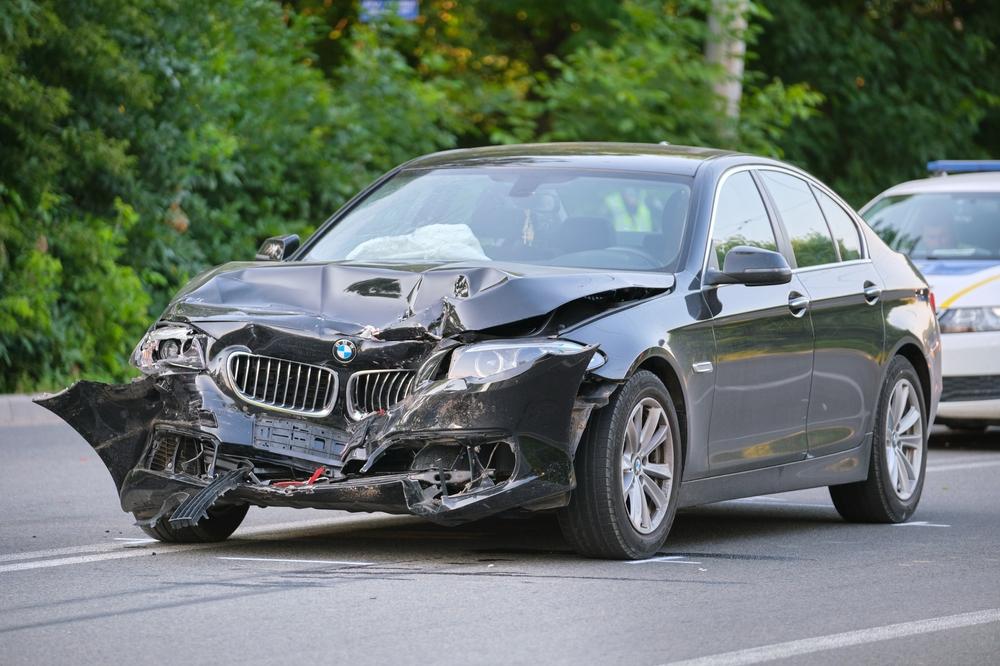 The New Jersey verbal threshold is satisfied by six categories of injury defined in the statute. An injury must fall into one of these categories for a driver subject to the Limitation on Lawsuit option to recover pain-and-suffering damages.
The six statutory categories under N.J.S.A. 39:6A-8 are:
- Death
- Dismemberment
- Significant disfigurement or significant scarring
- Displaced fractures
- Loss of a fetus
- Permanent injury within a reasonable degree of medical probability
The permanent injury category is where most threshold disputes happen. A permanent injury generally means a body part that has not healed to function normally and will not heal to function normally with further treatment, supported by objective medical evidence.
Whether a given injury clears that bar is frequently the central fight in a New Jersey auto injury case.
What Are UM and UIM Coverage and Why Do They Matter?
Uninsured motorist (UM) and underinsured motorist (UIM) coverage protect you when the at-fault driver has no insurance or not enough to cover your injuries.
UM coverage applies when the other driver has no insurance or flees the scene. UIM coverage applies when the other driver has insurance but the limits are too low to cover the losses.
Why This Coverage Is Often the Difference
UM and UIM coverage frequently determine whether a seriously injured person recovers anything close to their losses. A driver carrying minimum liability limits may cause a serious injury that far exceeds those limits.
When that happens, the injured person’s own UIM coverage may fill part of the gap, subject to the policy terms and the way New Jersey calculates available UIM benefits.
Situations Where UM and UIM Come Into Play
 Several common New Jersey crash scenarios turn on this coverage. Recognizing them helps drivers understand why the coverage is worth carrying at meaningful limits:
- Hit-and-run crashes where the at-fault driver is never identified
- Crashes caused by an uninsured driver
- Crashes where the at-fault driver carries only minimum limits
- Serious injuries that exceed the at-fault driver’s available coverage
- Phantom vehicle crashes where another car caused the wreck without contact
Carrying low UM and UIM limits is a common and costly gap in New Jersey auto policies. The coverage protects the policyholder, not the other driver, which is a point many people miss when choosing limits.
Should Health Insurance or PIP Be Primary?
New Jersey allows Standard Policy holders to choose whether PIP or their health insurance is the primary payer for accident-related medical bills.
The health-primary option, often called the health insurance primary election, can lower the auto premium by having the health plan pay first and PIP serve as backup.
When the Health-Primary Choice Works and When It Backfires
The health-primary election saves money for some drivers but creates problems for others. It works when the driver has strong, comprehensive health coverage that pays accident-related care without dispute.
It backfires when the health plan excludes auto-related injuries, imposes high deductibles, or is a plan that federal law exempts from the arrangement.
Confirming that the health plan actually accepts primary responsibility before selecting this option avoids a coverage gap after a crash.
Does PIP Cover Me as a Rideshare Passenger?
Newark Uber and Lyft accidents are one of the more complicated areas of New Jersey auto insurance because the coverage available to an injured passenger depends in part on the passenger’s own insurance status.
A passenger who has PIP through their own New Jersey auto policy or a qualifying resident relative may look to that coverage for medical expenses. A passenger with no available PIP may need to rely on health insurance, other applicable medical coverage, or arrangements that allow treatment to continue while the injury claim is pending.
Why Rideshare Coverage Is Complicated
New Jersey requires transportation network companies to carry substantial insurance while a driver is providing a prearranged ride, a key piece of understanding who is liable in a New Jersey rideshare accident.
During an active trip, the required coverage includes at least $1.5 million in liability coverage and $1.5 million in uninsured and underinsured motorist coverage.
The separate $10,000 medical payments requirement applies to the rideshare driver, not the passenger. N.J.S.A. 39:5H-10. That makes identifying the passenger’s available medical coverage an important early step after a rideshare crash.
Goldstein & Goldstein has an established network of treating doctors who work with injured clients in cases where PIP is unavailable or the coverage situation is still being sorted out.
That can be especially important for rideshare passengers who need orthopedic care, imaging, injections, surgery, or other treatment but do not have PIP available to pay those bills upfront.
Getting treatment should not stall simply because several insurers are still determining which policy applies.
Our office works through the insurance issues while helping clients connect with appropriate medical providers who can treat them without requiring the full cost of care upfront.
What Rideshare Passengers Should Preserve
Injured rideshare passengers should preserve information that helps establish both the crash and the insurance coverage in effect at the time. Useful records include:
- A screenshot of the trip receipt showing the driver and trip details.
- The driver’s name and vehicle information.
- The police or incident report number.
- Contact information for any witnesses.
- Records of medical treatment received after the crash.
- Any communications from Uber, Lyft, or an insurance carrier about the claim.
New Jersey law requires special insurance during rideshare trips, but determining how those policies interact with the passenger’s own coverage can take additional analysis.
Our firm handles that coverage work while helping injured passengers get the medical care needed to document and treat their injuries.
Is Motorcycle Coverage Different From Car Coverage in New Jersey?
Yes. Riders in Newark motorcycle accidents generally do not receive the same mandatory PIP benefits that apply when someone is injured while occupying an automobile.
That distinction can leave a rider responsible for finding another source to pay medical expenses after a serious motorcycle crash.
How Are Motorcycle Medical Bills Paid in New Jersey?
Because a motorcycle is not treated as an “automobile” for New Jersey PIP purposes, a rider generally cannot rely on standard PIP simply because they were injured in a motorcycle crash.
Possible sources of medical coverage may include health insurance and limited excess medical payments coverage available through a qualifying automobile policy.
Under N.J.A.C. 11:3-7.3(b), automobile policies subject to the rule must include at least $1,000 in excess medical payments coverage, and insurers may offer $10,000.
This coverage is separate from PIP and is intended to provide limited medical-expense protection in certain accidents where ordinary PIP does not apply.
The New Jersey Supreme Court has specifically recognized this distinction in a motorcycle case, explaining that a rider who was not eligible for basic PIP could potentially obtain medical-pay benefits under applicable automobile coverage.
For a rider with major injuries, however, those limited benefits may be exhausted quickly. Health insurance and the bodily injury claim against the responsible driver can therefore become especially important.
Does the Verbal Threshold Apply to Motorcycle Riders?
 Riding a motorcycle does not automatically eliminate the Limitation on Lawsuit threshold.
A motorcycle policy by itself does not impose the verbal threshold. But a rider may still be subject to the threshold if the rider is also covered by a New Jersey automobile policy for which the Limitation on Lawsuit option applies.
New Jersey courts have applied the threshold to motorcyclists in that situation even though the insured automobile was not involved in the crash.
That means two separate questions matter after a motorcycle accident: what coverage will pay the rider’s medical bills, and whether an automobile policy connected to the rider limits the right to recover pain-and-suffering damages.
What to Say to Insurance After an Accident in NJ
What you say to an insurance company after a New Jersey accident depends on which insurer is asking. Your own insurer may require reasonable cooperation under your policy, while the other driver’s carrier is evaluating how to limit its exposure.
The Recorded Statement Question
Recorded statements to the other driver’s insurance carrier can lock in phrases that come back to hurt a claim later. Statements like “I feel fine” made before delayed injuries surface become part of the adverse carrier’s evaluation.
Reporting the accident promptly without guessing about undiagnosed injuries, and getting advice before a detailed recorded statement to the other driver’s insurer, protects the claim.
Early Settlement Offers
Early settlement offers from an insurer often arrive before the full injury picture is known. Accepting an offer and signing a release generally ends the claim, even if the injury turns out to be worse than it first appeared.
Reviewing any early offer against the medical picture before signing anything is a reasonable safeguard.
FAQs for NJ PIP Coverage Explained
Can I change my verbal threshold choice after an accident?
No, you cannot change your verbal threshold choice after an accident to affect that claim. The lawsuit option in effect on the date of the crash controls your right to sue for pain and suffering.
You may change the option going forward at renewal, but the change does not apply retroactively to a crash that already happened.
Does PIP cover my passengers if they get hurt in my car?
Generally yes, PIP coverage under a New Jersey auto policy typically extends to passengers in your vehicle who do not have their own auto coverage.
Passengers who own their own auto policy usually look to their own PIP first. The coverage analysis depends on each passenger’s own insurance situation.
If I was hit by an out-of-state driver in New Jersey, whose rules apply?
Your own New Jersey PIP coverage generally still applies to your covered medical expenses, but the rules governing the out-of-state driver’s insurance can depend on that driver’s policy and insurer.
New Jersey’s deemer statute may require certain out-of-state policies to provide New Jersey-level coverage when the insured vehicle is operated here.
Do I have to use my own insurance if the other driver clearly caused the crash?
Yes, in New Jersey you generally use your own PIP for medical bills first, even when the other driver clearly caused the crash. That is what no-fault means.
Your pain-and-suffering and other damages claims proceed against the at-fault driver separately, subject to your lawsuit option.
Will my premium go up if I file a PIP claim after a crash I did not cause?
It depends on the insurer and the circumstances of the crash. New Jersey has rules that limit surcharges for not-at-fault claims, but insurer practices vary.
Using PIP benefits you paid for after a crash you did not cause is the coverage working as intended, and worrying about the premium should not stop necessary medical care.
Get Your New Jersey Coverage Reviewed Before You Rely on It

Richard Goldstein, Car Accident Attorney
Most people do not think closely about their New Jersey auto coverage until after a crash.
At that point, choices involving the verbal threshold, PIP limits, and UM/UIM coverage can directly affect which medical bills are paid and what compensation may be available.
Understanding those choices before an accident makes it easier to know what your policy actually provides.
If you were hurt in a crash and are trying to sort out which coverage applies to your situation, our office at Goldstein & Goldstein is available to walk through it. If your crash happened in Newark, our Newark car accident lawyers can also explain how these coverage rules apply to your claim.
Michael and Richard Goldstein review New Jersey auto injury cases personally at our East Orange office, in English, Spanish, or Haitian Creole.
A conversation about your coverage, your lawsuit option, and what your claim may realistically involve is free, and it commits you to nothing.
