

Our Family Has Given A Voice To The Injured For Over 50 Combined Years
Supermarket Slip and Fall Lawyer in Newark
Supermarket slip and fall cases in Newark often depend on whether the store’s self-service setup made the hazard foreseeable.
Under New Jersey’s mode-of-operation rule, an injured shopper may not need to prove the store had actual or constructive notice of the specific spill or dropped item. The rule can apply when the danger is closely connected to the way customers handle products, serve themselves, or move through a self-service area.
New Jersey Supreme Court cases, including Nisivoccia v. Glass Gardens, Inc., explain how the rule applies. In the right case, the focus shifts away from how long the hazard was on the floor and toward whether the store’s method of operation created a predictable risk.
A Newark supermarket slip and fall lawyer should review the location of the fall, the type of hazard, surveillance footage, sweep logs, and the store’s inspection practices before deciding how to build the claim.
Goldstein & Goldstein, LLP handles grocery store slip and fall claims for clients in Newark, East Orange, Irvington, the Ironbound, and throughout Essex County. Reach us through our contact form to talk about what happened.
Why Are Sweep Logs and Inspection Records the Center of a Supermarket Case?
Sweep logs are the store’s internal record of how often (and by whom) each aisle was walked and inspected for hazards. Most major supermarket chains maintain these logs at least electronically and often on paper posted in each department.
When a fall happens, the sweep log becomes the store’s primary defense: proof that reasonable inspection procedures were in place and being followed at the time.
That same log is often the plaintiff’s best evidence in the case. Missing entries, gaps of hours between sweeps in high-traffic areas, or signatures that appear to be copied from earlier shifts all support the argument that the store engaged in negligent and improper maintenance of the premises.
In mode-of-operation cases, sweep logs matter even more because the store’s rebuttal case depends on showing what it did to prevent the predictable hazard.
How Does Our Firm Use Sweep Logs to Build the Case?
Michael J. Goldstein has led our firm’s trial practice since taking over that role from his father Richard Goldstein, who founded Goldstein & Goldstein, LLP in 1997. Michael carries the New Jersey Supreme Court Certified Civil Trial Attorney designation.
Our office subpoenas sweep logs, employee schedules, and prior-incident reports early in every supermarket case, because those records shape settlement discussions long before the case ever gets near a courtroom.
How Does the Mode-of-Operation Rule Change a Supermarket Slip and Fall Case in NJ?
 The mode-of-operation rule allows a plaintiff in a self-service business setting to establish an inference of negligence without proving the store had actual or constructive notice of the specific hazard.
The New Jersey Supreme Court applied the rule in Nisivoccia v. Glass Gardens, Inc., 175 N.J. 559 (2003), a case involving loose grapes on the floor near a self-service produce display.
The doctrine applies when the store’s chosen business model (customers handling products themselves) predictably produces the type of danger that caused the injury.
The New Jersey Supreme Court clarified the rule in Prioleau v. Kentucky Fried Chicken, Inc., 223 N.J. 245 (2015).
The rule applies when customers serve themselves or handle products without staff help, and that self-service activity is reasonably connected to the hazard that caused the fall. It does not apply to the entire property automatically.
| Element to Prove | Standard Premises Case | Mode-of-Operation Case |
|---|---|---|
| The hazard existed | Plaintiff must prove | Plaintiff must prove |
| Store had notice of the hazard | Plaintiff must prove actual or constructive notice | Plaintiff does not need to prove actual or constructive notice |
| Store failed to act reasonably | Plaintiff must prove | Store must show reasonable care |
| Injury caused by the hazard | Plaintiff must prove | Plaintiff must prove |
| Store’s rebuttal path | Deny knowledge of the hazard | Show it exercised reasonable care to prevent the risk |
The doctrine does not apply to every fall in a supermarket. A fall in an area unaffected by self-service (a manager’s office, a locked stockroom) does not fit within it.
Falls involving loose produce, self-serve prepared-food stations, and unpackaged bulk items may fall within the rule when the hazard is connected to the store’s self-service operation.
What Are the Most Common Supermarket Hazards That Cause Falls?
Grocery store falls follow a small number of recurring hazard patterns, and each pattern maps to a specific piece of evidence our office pursues in the first weeks after intake. Understanding the mechanism helps identify what records the store maintains that may prove the case.
Common hazard categories in Newark-area supermarket claims include:
- Produce and floral spills in self-service sections (grapes, cherries, water tracked from misted displays)
- Freezer and refrigerator condensation dripping onto floors in the frozen foods aisles
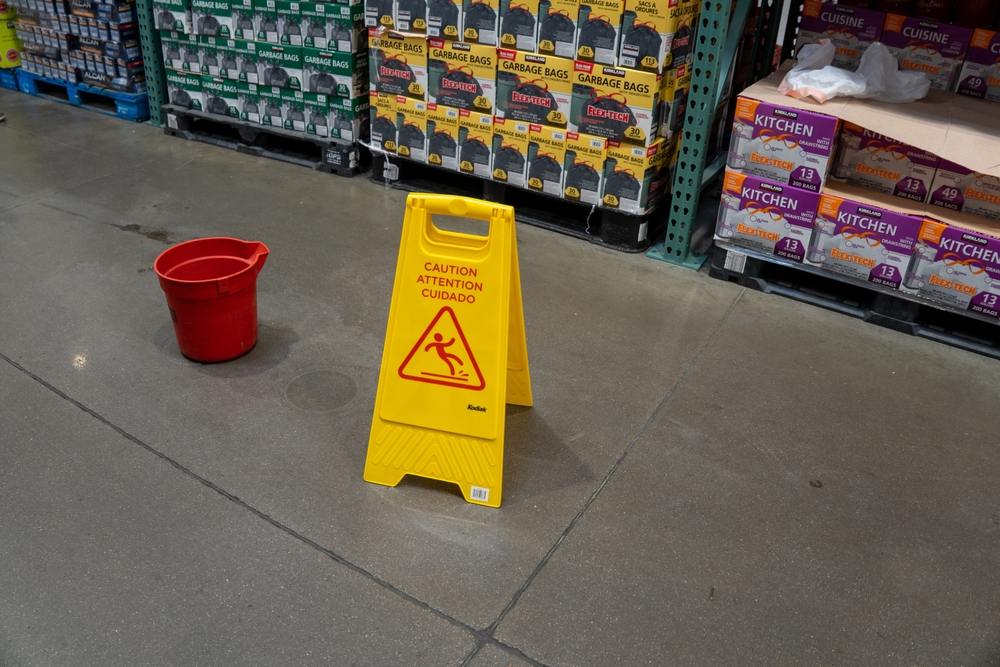
- Recently mopped or waxed floors without a “Wet Floor” sign in place
- Fallen stock from overhead shelving, endcap displays, or promotional stackings
- Leaking dairy, meat, or seafood packaging in refrigerated cases
- Rainwater or snow tracked into entrance vestibules without adequate mats
Each hazard type interacts differently with the mode-of-operation rule. Loose produce near self-service displays often sits inside it.
Rainwater tracked into an entrance vestibule is closer to a traditional notice analysis. Sorting out which framework applies to the specific fall is the first substantive step in the case.
How Fast Does Supermarket Surveillance Video Get Overwritten?
 Supermarket surveillance video retention commonly ranges from about 7 to 30 days, but policies vary by chain, location, and camera system. Once the retention window closes, the footage is usually gone permanently.
What surveillance video typically captures in a supermarket fall case includes:
- The exact moment and mechanism of the fall
- Whether a hazard existed on the floor and for how long before the fall
- Whether store employees walked past the hazard without addressing it
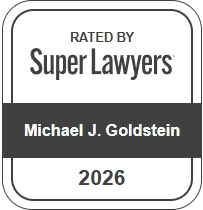
- Whether warning cones or “Wet Floor” signs were in place
- Store staff response after the fall, including whether an incident report was completed on the scene
An attorney engaged within 7 to 10 days of the fall may send a formal preservation letter putting the store on notice that relevant surveillance footage and other evidence should be preserved.
Waiting three or four weeks often means arriving to find the footage gone, and the case then rests on the sweep log and witness memory alone.
What Should You Not Say to the Store Manager After a Fall?
Statements made to the store manager or store staff in the minutes after a fall often become the store’s central defense at trial.
Managers are trained to complete an incident report that captures the injured customer’s own words, and those words get used later. A short list of things not to say generally protects the case.
Statements to avoid making to store staff after a supermarket fall include:
- “I’m fine” or “It’s not that bad” (used later to challenge the seriousness of the injury)
- “It was my fault” or “I wasn’t watching where I was going” (used to argue comparative negligence)
- Speculation about what caused the fall before you actually know
- A specific description of your injuries before medical evaluation
- Agreement to sign anything the store presents, including the incident report
Politely accepting medical attention and declining to speculate about the fall or the injuries is the right posture.
A written incident report may be requested through counsel later, when the injured customer’s words are not being captured in real time by someone with a professional interest in the answers.
Can the Store Blame You for a Grocery Store Fall in New Jersey?
Yes, and the store’s insurer usually will, though comparative negligence in New Jersey generally does not bar recovery unless the customer’s fault exceeds 50 percent.
Under N.J.S.A. 2A:15-5.1, New Jersey’s modified comparative negligence rule allows recovery reduced by the customer’s percentage of fault, provided that percentage does not exceed 50 percent. Cross that line and the claim is barred.
Common comparative-fault arguments raised in supermarket cases include claims that the customer was distracted by a phone, was carrying too many items, wore inappropriate footwear, or walked past a warning cone.
These arguments rarely defeat the case entirely in retail store accidents, though they may reduce the recoverable damages.. A jury asked to compare a shopper’s distraction to a store’s failure to clean up a known produce spill usually assigns the larger share of fault to the store.
What Damages May a Grocery Store Fall Victim Recover in NJ?
 A person injured in a supermarket slip and fall may recover damages for medical expenses, lost income, pain and suffering, and future losses tied to the injury. Common injury patterns from supermarket falls include:
- Wrist and forearm fractures from bracing forward during the fall
- Hip fractures, particularly in older shoppers
- Spinal injuries from the impact of the fall itself
- Head injuries from striking the floor or nearby fixtures
- Shoulder tears from the reflexive motion during the fall
Damages depend on the severity of the injury, the strength of the mode-of-operation or notice evidence, and the liability coverage the store maintains.
How Does Insurance Coverage Affect a Supermarket Injury Claim?
Major supermarket chains typically carry substantial liability policies, though those policies are administered by carriers that negotiate aggressively. Independent grocers and smaller specialty stores may carry lower limits, which affects the practical damages picture even when liability is clear.
Recoverable damages may include past and future medical expenses, lost wages, lost earning capacity, and non-economic damages such as pain and suffering. N.J.S.A. 2A:14-2 generally gives an injured person two years to file a personal injury lawsuit.
FAQs for Supermarket Slip and Fall Lawyer
The Store Says They Have Cameras Everywhere. Why Do I Need to Move Fast?
Cameras record everything, but grocery store surveillance systems overwrite older footage automatically. Retention windows commonly run from 7 to 30 days depending on the chain and the store.
Once the window closes, the video that showed exactly what happened is gone permanently, no matter what the store manager promised at the time.
If I Signed the Store’s Incident Report, Did I Already Ruin My Case?
Not necessarily, though it depends on what you wrote and signed. Incident reports often include admissions or minimizations that get used later, but they are not automatic case-killers.
An attorney may still work around inaccurate statements by contextualizing them, correcting them, or challenging how the report was prepared. Do not assume the case is over because you signed something at the scene.
What if I Fell in the Parking Lot Instead of Inside the Store?
You may still have a claim, though the analysis is different. Parking lot falls are governed by standard premises liability rather than the mode-of-operation rule, so notice becomes the central question.
The store, the property owner, and any snow removal or maintenance contractor may share liability depending on how the lot is managed.
My Injury Seemed Minor at First but Got Worse. Am I Too Late?
Probably not, if you are within the two-year deadline and you saw a doctor at some point. Delayed-onset injuries from slip and falls are common and do not automatically defeat the case.
Document the medical trajectory carefully and be prepared for the insurer to attack the delay in seeking care.
Can I Sue if I Slipped on a Product That a Customer Just Dropped Seconds Before My Fall?
Maybe. Under the mode-of-operation rule, a store may still be liable when the dropped item is the predictable result of its self-service business model, even if the specific spill happened moments before the fall.
Traditional notice analysis would defeat the case, but the doctrine’s whole point is to relieve the plaintiff of proving notice in those exact settings.
Answer the “We Couldn’t Have Known” Defense With What You Actually Have

Richard Goldstein, Premises Liability Attorney
Most grocery store falls end at the customer service desk, where a manager politely explains that the store had no way of knowing about the hazard and hands over a business card for the risk management department. That explanation glosses over New Jersey law.
The mode-of-operation rule exists precisely because the traditional notice defense often does not fit self-service retail. Whether it applies to a specific case depends on the details, and those details are worth a legal review before the file gets closed.
Contact Goldstein & Goldstein, LLP through the form on our site. We handle supermarket injury cases across Newark and Essex County, and we open every file by evaluating whether mode-of-operation analysis applies and what evidence the store still has.
Our East Orange Office
60 Evergreen Place
Suite 502
East Orange, NJ 07018
