

Our Family Has Given A Voice To The Injured For Over 50 Combined Years
Elevator Accident Lawyer in Newark
A Newark elevator accident lawyer helps injured riders determine who may be liable, preserve maintenance and inspection records, and build a negligence claim based on the circumstances of the malfunction.
In many New Jersey elevator cases, an injured person may be able to rely on res ipsa loquitur, a doctrine that allows negligence to be inferred when certain elements are met.
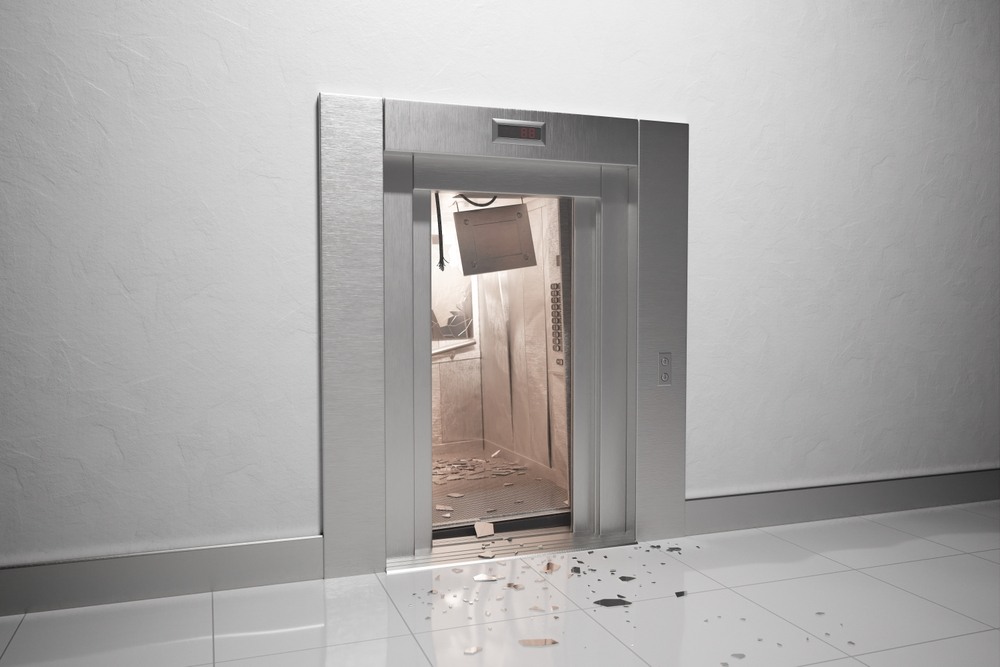
Res ipsa loquitur means “the thing speaks for itself.” If an elevator mislevels, drops unexpectedly, traps riders between floors, or closes its doors on someone, the nature of the malfunction may support an inference of negligence even when the injured person cannot identify the exact mechanical defect.
These cases often turn on three questions: whether res ipsa loquitur applies, which party controlled or maintained the elevator, and what the inspection, repair, and maintenance records show about the condition before the accident.
Goldstein & Goldstein, LLP represents people injured in elevator and escalator accidents across Newark, East Orange, Irvington, and the surrounding Essex County area. Contact our team through our online form for a private case review.
How Do Inspection Records Prove an Elevator Injury Case?
Inspection records prove elevator injury cases by documenting what the owner and maintenance contractor knew about negligent and improper maintenance on the elevator before the failure.
New Jersey requires elevators to be inspected regularly under N.J.A.C. 5:23-12, the Elevator Safety Subcode. Inspection and testing records may document prior deficiencies, repairs, or recurring problems and can often be obtained through discovery.
Two pieces of our practice shape how these cases develop in the first weeks after intake.
Preservation Letters Sent Fast
 Preservation letters go out to the building owner, the maintenance contractor, and any repair company that worked on the elevator recently.
The letters demand preservation of inspection reports, service tickets, complaint logs, and any surveillance video covering the elevator entrance. Records that are not preserved often cycle out of retention within months.
Firm Background and Expert Coordination
Goldstein & Goldstein, LLP is a family-owned personal injury firm established in 1997 by Richard Goldstein, now partnered with his son Michael J. Goldstein.
Michael J. Goldstein holds the New Jersey Supreme Court Certified Civil Trial Attorney designation, held by a small percentage of civil litigators statewide.
Our office coordinates with elevator mechanic experts who review the maintenance history, compare it to industry standards, and identify the specific deviation that most likely caused the failure.
Client reviews for the firm currently average 4.7 stars across 316 Google reviews.
Why Do Elevator Cases Often Involve Res Ipsa Loquitur?
Res ipsa loquitur is a legal doctrine that lets an injured person establish a prima facie case of negligence indirectly, without pinpointing the exact mechanical cause of the failure.
New Jersey courts have applied the doctrine to elevator malfunctions, including malfunctioning elevator doors, when the elements are satisfied. The doctrine allows a jury to infer negligence from the circumstances but does not automatically prove it.
The three elements a New Jersey court weighs when applying res ipsa loquitur to an elevator case are:
- The injury was caused by an instrumentality under the defendant’s exclusive control.
- The injury is of a kind that ordinarily does not occur in the absence of negligence.
- The injured person did not voluntarily contribute to the cause of the failure.
Our office maps that three-part test to the facts of every elevator case at intake.
The doctrine matters because elevator failures often occur in mechanical spaces the plaintiff never sees. A rider does not usually know whether the cause was a worn hoist cable, a faulty leveling sensor, or a missed maintenance interval.
Res ipsa loquitur, when its elements are met, may support the negligence claim without the plaintiff having to identify the specific mechanical failure.
The doctrine is not a guaranteed win. Courts have rejected res ipsa where exclusive control or another element was not established.
When it does apply, it shifts how the case gets presented and often changes settlement dynamics with the property owner’s insurer.
Who Can Be Held Liable for an Elevator Accident in NJ?
Multiple parties may share liability in a New Jersey elevator accident case under premises liability law, and identifying the right defendants often affects the size of the recoverable damages pool.
Building owners are usually the first named defendant, but the maintenance contractor, the elevator manufacturer, and the property management company each carry independent duties that may support liability.
Sorting out defendants often requires records requests to several parties in the first weeks of a case.
| Potential Defendant | When They May Be Liable |
|---|---|
| Building owner | Owns the elevator and retains general responsibility for tenant and visitor safety |
| Elevator maintenance contractor | Service agreement covered inspection, repair, and monitoring at the time of the failure |
| Property management company | Manages the building under contract with the owner and had knowledge of prior complaints |
| Elevator manufacturer | Design or manufacturing defect contributed to the failure |
| Component part supplier | Cable, sensor, control board, or safety device failed and traces to a specific supplier |
| Repair or modernization contractor | Recent work on the elevator was performed negligently and caused the later failure |
Most elevator claims in Newark’s older high-rises involve some combination of owner and maintenance contractor, much like claims involving defective stairways in the same buildings
Manufacturer cases are less common, though they may involve separate product-liability theories when a design or manufacturing defect caused the failure.
What Are the Most Common Elevator and Escalator Failures?
Elevator and escalator failures follow a small number of recurring failure patterns, and each pattern produces a different type of injury. Understanding the mechanism is often the first step in figuring out which defendant is responsible and how the case fits within the res ipsa doctrine.
Misleveling at the Floor Stop
Misleveling happens when the elevator stops several inches above or below the floor level, creating a step or drop where none should exist. Riders stepping in or out catch a toe, roll an ankle, or fall forward.
Potential causes of misleveling may include problems with leveling controls, braking systems, sensors, or maintenance.
Door Strikes and Failure to Reopen
 Elevator doors are required by code to reverse when they contact a person or object during closing. Doors that continue to close on a person may indicate a failed sensor, a misadjusted door timing setting, or a defective detector edge.
Injuries from door strikes range from bruising to shoulder and rib injuries when the door catches a person mid-step.
Sudden Drops and Falls
Sudden drops and unexpected falls between floors are among the most serious elevator failures, though also the least common. Potential causes may include problems with hoist ropes, brakes, governors, or other elevator components.
The safety systems required by code should stop a falling elevator within a few feet, and when those systems also fail, the injury pattern often includes spinal and lower-extremity fractures from the impact a risk that extends to hotel and motel accidents in elevators as much as any office or apartment building.
Entrapment Between Floors
Entrapment happens when the elevator stalls between floors and traps riders inside, sometimes for hours. Physical injuries may include cuts and bruises from a forced exit, panic-related medical events, and worsening of existing conditions in riders with heart or respiratory issues.
Extended entrapments have supported claims for emotional distress in addition to physical injury.
Escalator Falls and Entrapments
Escalator failures include sudden reversals, missing or damaged comb plates at the entry, loose handrails moving at a different speed than the steps, and clothing or footwear catching in the mechanism.
Escalator injuries can involve falls, sudden movement, or entrapment, particularly when balance, clothing, or footwear becomes involved.
What Should You Do After an Elevator or Escalator Accident?
Documenting the incident before the property owner cleans up the scene and pulls the elevator out of service for “inspection” is one of the most useful things an injured person does before hiring counsel.
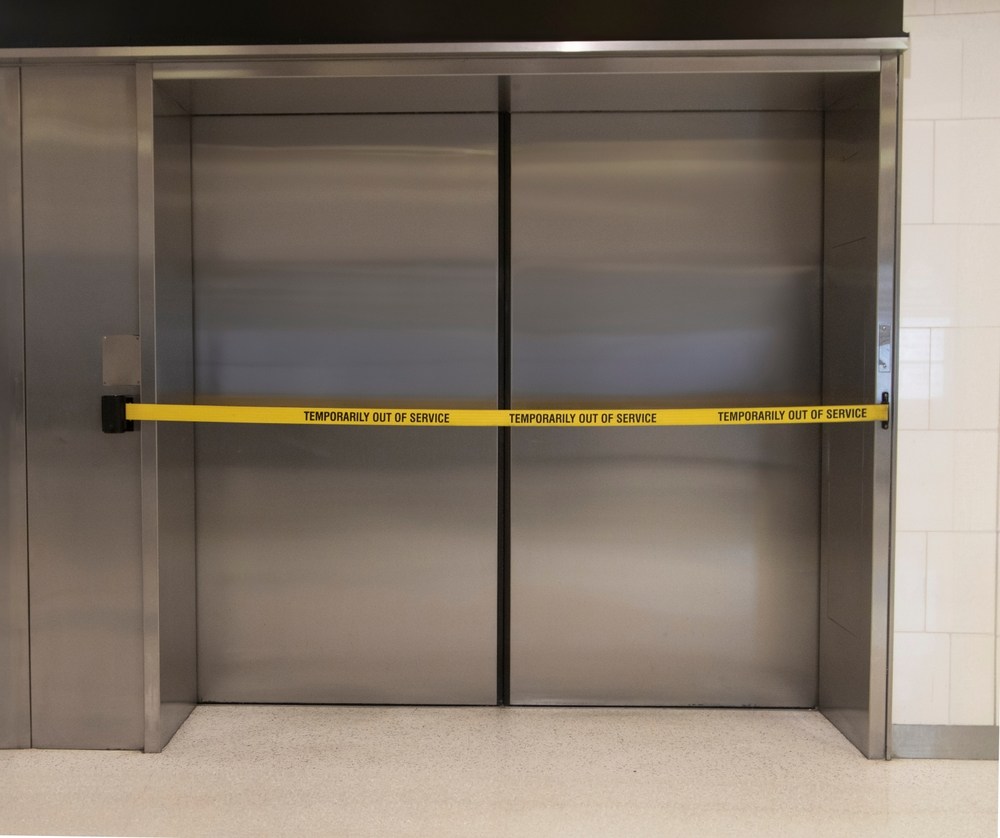 Property owners often respond to an injury by taking the elevator down and running immediate maintenance, which changes the physical evidence within hours.
Steps that protect an elevator injury claim include:
- Photograph the elevator interior, the misleveling gap, the door, or the escalator step involved in the injury.
- Photograph the certificate of inspection posted inside the car, which shows the inspection date and inspector.
- Get names and contact information for any witnesses who were on the elevator or nearby.
- Report the incident to building security or management in writing and request a copy of the incident report.
- Get medical attention promptly and describe how the injury happened to every provider.
- Save torn clothing, broken personal items, or any physical evidence tied to the failure.
- Ask that the elevator be preserved in its current condition until an expert can inspect it.
Documentation created within the first day of the incident closes off two common defense arguments: that the failure was a one-time anomaly, and that the injured person cannot prove what actually happened.
Contemporaneous photographs shift the case back onto the mechanical facts.
What Damages May an Elevator Accident Victim Recover?
A person injured in an elevator or escalator accident may recover damages for medical expenses, lost income, pain and suffering, and future losses tied to the injury.
Recovery depends on the severity of the injury, the number and coverage of the defendants, and the strength of the maintenance-record evidence. Commercial building owners and elevator maintenance contractors typically carry liability policies with meaningful limits.
Elevator injuries tend to produce catastrophic injuries because the person is often trapped, thrown, or struck by heavy moving parts Common injuries our office handles include:
- Fractures of the wrist, ankle, or hip from misleveling falls
- Spinal compression injuries from sudden drops
- Shoulder and rib injuries from door strikes
- Head injuries from being thrown against elevator walls
- Emotional distress from extended entrapment incidents
Serious cases often need orthopedic surgery, physical therapy, and long-term specialist care. Damages calculations account for the treatment path each individual injury generates, not a one-size-fits-all number.
FAQs for Elevator Accident Lawyer
The Building Manager Wants Me to Sign an Incident Report Before I Leave. Do I Have to?
No, and you generally should not. An incident report drafted by building staff often captures a version of events favorable to the property, and signing it may be treated later as adoption of that account.
Politely decline, get medical attention, and let a lawyer request the full report through formal channels.
The Elevator Company Sent Someone to Interview Me. Should I Talk to Them?
No, not without counsel. Elevator maintenance companies carry liability insurance, and the person calling is usually an adjuster or claims investigator working to limit the carrier’s exposure. Anything said in that interview may be used to shape defenses months later, including quotes taken out of context.
Does It Matter if the Elevator Has Been Repaired Since My Accident?
Yes, though not for the reason many people assume. New Jersey Rule of Evidence 407 generally bars using a subsequent repair to prove negligence, so the repair itself is not admissible to show fault.
What repairs do affect is the physical evidence, because they change or eliminate the condition that caused the injury. Prompt legal engagement helps preserve documentation of the original condition before the repair is completed.
Can Multiple People Injured in the Same Elevator Incident File Together?
Yes. Group injuries from a single elevator failure (an entrapment with several riders, a sudden drop, an escalator reversal) often support joint representation or coordinated separate claims.
Sharing an expert investigation across cases spreads the cost and often produces stronger evidence than individual cases handled alone.
What Kind of Expert Actually Reviews an Elevator After a Failure?
A qualified elevator mechanic or engineer with certification through a body such as the National Association of Elevator Contractors typically performs the mechanical review.
Our office selects experts based on the specific failure mode (hydraulic system, cable-driven traction, escalator drive) rather than a generic elevator consultant, because failure analysis requires specialization within the trade.
Get the Maintenance Records Requested Before They Disappear

Richard Goldstein, Premises Liability Attorney
The elevator injury cases that develop the strongest evidentiary records share one habit: someone sent preservation letters to the building owner and the maintenance contractor within days of the incident, before service tickets and inspection reports cycled out of retention.
Once those records are gone, the case shifts from documentation to witness recollection alone, which is a weaker foundation for either settlement or trial.
Contact Goldstein & Goldstein, LLP through our secure form. We will send preservation letters to every custodian of the elevator maintenance records, coordinate expert review of the failure mode, and give you a real assessment of the res ipsa argument that applies to your case.
Our East Orange Office
60 Evergreen Place
Suite 502
East Orange, NJ 07018
