

East Orange Wrongful Death Lawyers
Losing a family member in East Orange to someone else’s negligence usually produces the same first question from surviving relatives. Who is actually allowed to file the case?
Under New Jersey’s Wrongful Death Act, the lawsuit is brought by the representative authorized under N.J.S.A. 2A:31-2, such as an administrator ad prosequendum, administrator, or qualifying executor, rather than directly by individual family members.
An East Orange wrongful death lawyer generally begins by getting a family member appointed in the appropriate representative capacity through the Essex County Surrogate’s Court in Newark.
That appointment is an important early procedural step. Our firm handles that step, along with the substantive fatal-injury case, from our office in East Orange.
What Do Families Actually Need From a Fatal-Injury Firm in East Orange?
 Fatal-injury cases sit at the intersection of civil litigation and probate work, and families usually need coordination across both.
Getting the appropriate representative appointed at the Essex County Surrogate’s Court comes first, and the civil claim under NJ’s Wrongful Death Act and Survival Act follows.
Coordination With the Essex County Surrogate’s Court
The Essex County Surrogate’s Court in Newark handles the appointment of the administrator ad prosequendum, executors, and general administrators for East Orange families.
Our office coordinates that appointment when the family has not already begun it, so the civil case can proceed without avoidable procedural gaps.
Two-Statute Filing Under NJ Law
Many New Jersey fatal-injury cases involve two separate causes of action: a Wrongful Death Act claim for qualifying survivors’ losses and a Survival Act claim preserving losses that belonged to the deceased person before death.
The two claims are distinct in their beneficiaries, damages, and representative requirements, and handling them together requires attention to both frameworks.
A Family Firm With Deep Roots in East Orange
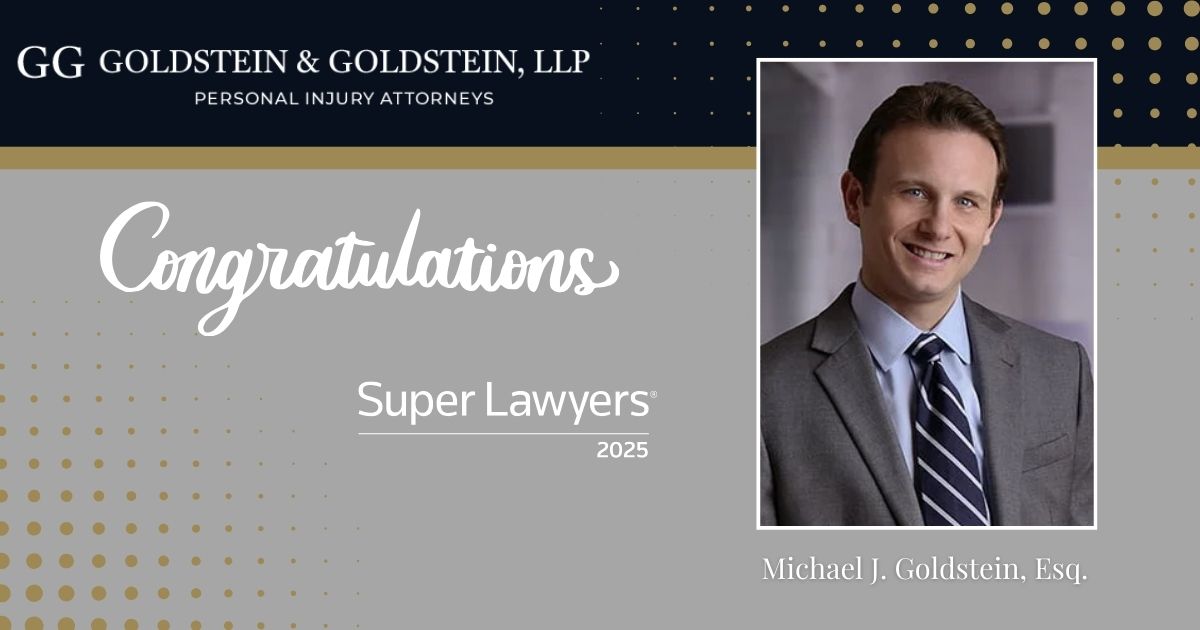
Goldstein & Goldstein has represented injured people and families from its East Orange office since 1997. Richard Goldstein founded the firm, and today he practices alongside his son, Michael J. Goldstein, a New Jersey Supreme Court Certified Civil Trial Attorney.
Our four attorneys bring more than 50 years of combined legal experience. Staying small allows us to give families direct access to the attorneys handling their case during a time when clear answers and consistent communication matter.
Past firm results include recoveries of $1.1 million, $825,000, $800,000, $695,000, and $609,000. Past results do not guarantee a similar outcome because every case depends on its own facts and circumstances.
We offer intake in English, Spanish, and Haitian Creole and handle wrongful death cases on a No Recovery, No Fee basis.
Who Has Legal Standing to File a Wrongful Death Claim in New Jersey?
A wrongful death lawsuit in New Jersey is brought in the name of an administrator ad prosequendum or administrator of the deceased person, rather than directly by individual family members.
That is set by N.J.S.A. 2A:31-2. The representative acts on behalf of the surviving family members who may recover under the statute, but the lawsuit itself is filed in the representative’s name.
Wrongful death beneficiaries are generally determined by reference to the people entitled to inherit the decedent’s personal property under New Jersey intestacy law, with dependency also affecting who shares in the recovery.
 Depending on the family structure, that group may include:
- A surviving spouse or domestic partner
- Children of the deceased
- Parents of the deceased
- Other qualifying next of kin
Beneficiary status matters for how any recovery is distributed, not for who files the lawsuit. Both questions are handled together in an East Orange wrongful death case.
What Is the Difference Between a Wrongful Death Claim and a Survival Action in NJ?
A New Jersey wrongful death claim compensates the surviving family for their losses caused by the death, while a survival action compensates the estate for what the deceased person suffered before dying.
Wrongful death and survival claims are often pursued together, but they are distinct causes of action with different beneficiaries, damages, and representative requirements.
| Claim Type | What It Compensates | Who Benefits |
|---|---|---|
| Wrongful Death Act (N.J.S.A. 2A:31-1 et seq.) | Pecuniary losses to qualifying survivors caused by the death | Statutory survivors identified by reference to NJ intestacy law and dependency |
| Survival Act (N.J.S.A. 2A:15-3) | Losses that belonged to the deceased before death, including pain and suffering | The deceased person’s estate |
The distinction matters because the damages recoverable under each claim are different, and whether meaningful survival damages exist depends on the circumstances of the case.
Wrongful Death Act damages generally focus on pecuniary loss, including lost financial support, lost household services, and the loss of guidance and counsel to surviving children.
Survival Act damages focus on what the deceased suffered while alive after the injury, including conscious pain and suffering, medical expenses incurred before death, and lost wages between injury and death.
What Does the Essex County Surrogate’s Court Step Look Like?
 The Essex County Surrogate’s Court in Newark is where the appropriate representative of a deceased East Orange resident’s estate is officially appointed.
Obtaining the proper appointment is an important procedural step in pursuing the claim, although New Jersey law provides a mechanism in some cases to correct the representative’s status after a lawsuit has been filed.
Typical steps in the appointment process include:
- Filing a probate application at the Essex County Surrogate’s Court with the original will, if one exists
- Filing an administration application when there is no will, with proof of relationship
- Applying for appointment as administrator ad prosequendum where the wrongful death claim is being pursued
- Providing a certified death certificate and personal identification for the proposed representative
- Receiving Letters Testamentary, Letters of Administration, or the appropriate ad prosequendum designation
The Letters or ad prosequendum appointment give the representative legal authority to act in the applicable capacity, and the wrongful death lawsuit proceeds from there.
Families new to probate often find this step confusing, and coordination with an attorney handling the civil case tends to reduce delays.
How Long Do Families Have to File a Wrongful Death Claim in New Jersey?
Two years from the date of death is the general filing deadline for a wrongful death claim in New Jersey. That deadline is set by N.J.S.A. 2A:31-3. The two-year clock generally runs from the date of death rather than the date of the injury that caused the death.
Public-entity claims run on a different timeline. When the defendant is a city, township, county, school district, or NJ Transit, the New Jersey Tort Claims Act generally requires a written notice of claim within 90 days under N.J.S.A. 59:8-8.
Missing the 90-day notice deadline can jeopardize an otherwise valid fatal-injury claim, although New Jersey law allows late notice in limited circumstances.
How Are Wrongful Death Damages Distributed Among Heirs in New Jersey?
Wrongful death recoveries in New Jersey are distributed among the statutory beneficiaries under the framework in N.J.S.A. 2A:31-4 and N.J.S.A. 2A:31-5, which considers intestate-successor status and dependency. That is a separate track from any recovery under the Survival Act.
Survival Act recoveries pass to the deceased person’s estate and are distributed according to the will or, if there is no will, under New Jersey’s intestate succession rules. The two distribution frameworks are different, which is one of the reasons both statutes matter in the same case.
 Distribution questions to expect in an East Orange fatal-injury case include:
- Allocation among wrongful death beneficiaries under the statutory framework
- The estate’s disposition of Survival Act recovery under the will or intestate law
- Court approval of any settlement affecting a minor beneficiary
- Coordination with any existing liens, including Medicare, Medicaid, and hospital liens
- Tax treatment of the recovery, which generally follows federal and NJ personal injury rules
Getting these worked out during settlement negotiation reduces the risk of family disputes after the case concludes. Approvals affecting minor beneficiaries usually require additional court steps in Superior Court.
What Kinds of Fatal-Injury Cases Come Through an East Orange Firm?
Fatal-injury cases in the East Orange area cluster around a familiar set of causes, often overlapping with our East Orange catastrophic injury files, driven by the roads, industries, and neighborhoods around the city
Each cause carries its own liability theory and proof issues, though the wrongful death and survival action framework applies across them.
Common categories in East Orange wrongful death files include:
- Commercial truck crashes along the Route 280 and Interstate 78 corridors
- Passenger vehicle collisions on Central Avenue, Main Street, and connecting arterials
- Pedestrian and cyclist fatalities in mixed-use corridors around downtown Newark
- Fatal falls and premises injuries in commercial and multi-family residential settings
- Medical malpractice cases involving fatal outcomes at area hospitals and nursing facilities
- Workplace fatalities where a third-party defendant is responsible alongside the workers’ compensation claim
Each of these categories involves its own investigation, expert work, and coverage analysis, much like any East Orange personal injury claim built from the ground up. What holds across all of them is the two-statute framework and the Essex County Surrogate’s Court representative step.
FAQs for East Orange Wrongful Death Lawyer Cases
Can I file a wrongful death lawsuit in East Orange if my parent died without a will?
Yes, a wrongful death lawsuit may proceed even when the deceased did not leave a will. An administrator is appointed by the Essex County Surrogate’s Court under NJ intestate rules, and that representative files the lawsuit on behalf of the statutory beneficiaries.
The absence of a will affects who is appointed, not whether the case may be filed.
How much does a wrongful death lawyer in East Orange cost?
There is no upfront attorney fee to hire our firm for a wrongful death case. Goldstein & Goldstein, LLP handles these claims on a No Recovery, No Fee basis, which means we charge an attorney fee only if we recover compensation for the family.
We also advance the costs of building the case, including qualifying expert and litigation expenses.
Do all surviving family members have to agree to file the case?
No, agreement among all surviving family members is not required to file. The representative appointed by the Essex County Surrogate’s Court has legal authority to file and to make case decisions on behalf of the beneficiaries.
Distribution among beneficiaries is decided separately.
Can the family sue if the person who caused the death was also charged with a crime?
Yes, a criminal case and a civil wrongful death case may both proceed. The criminal and civil cases are separate proceedings with different purposes and standards of proof.
The criminal case is filed by prosecutors and seeks punishment. The civil case is filed by the appointed representative and seeks compensation for the family.
What if the death happened months after the injury?
The two-year wrongful death deadline generally runs from the date of death rather than the date of the injury. That may be important in cases where a person survives for weeks or months after the underlying incident.
Any personal injury claim the deceased had while alive may also survive as part of the estate’s Survival Act claim.
What documents does the family need to bring to the first meeting?
Bringing the certified death certificate, any will, and the police or incident report if one exists makes the first meeting more useful.
Medical records, insurance information, and identification for the proposed representative also help. Nothing needs to be complete before the first conversation.
Take the First Procedural Step for Your East Orange Wrongful Death Case
Getting the appropriate representative appointed through the Essex County Surrogate’s Court is often an important early step in a New Jersey wrongful death case. At the same time, evidence may need to be preserved, responsible parties identified, and applicable deadlines addressed.

Richard Goldstein, Wrongful Death Lawyer
Goldstein & Goldstein has represented families from East Orange since 1997. Our father-and-son firm includes four attorneys with more than 50 years of combined experience, and Michael J. Goldstein is a New Jersey Supreme Court Certified Civil Trial Attorney.
Past firm results include recoveries of $1.1 million, $825,000, $800,000, $695,000, and $609,000. Past results do not guarantee a similar outcome because every case depends on its own facts and circumstances.
Your first conversation costs nothing. We handle wrongful death cases on a No Recovery, No Fee basis and advance case costs while the claim is pending. Intake is available in English, Spanish, and Haitian Creole.
Reach out through the contact form to speak with an East Orange wrongful death lawyer about the representative appointment, the Wrongful Death and Survival Act claims, and the deadlines that may apply to your family.
