

Newark Snow Plow Accident Lawyer
Getting hit by a snow plow can be frightening, especially when the crash leaves you injured and unsure who is responsible. You may assume the city is liable, but the plow could belong to a government agency, transportation authority, or private contractor.
Who operated the vehicle can affect your ability to recover compensation.
New Jersey law treats claims against public entities differently from claims against private companies. Some government claims face broad immunity protections and notice deadlines as short as 90 days.
Identifying the plow operator early can help protect your right to pursue compensation.
At Goldstein & Goldstein, LLP, our Newark snow plow accident lawyers investigate who operated the vehicle, determine which liability rules apply, and gather evidence to support your claim.
If a snow plow hit you, acting quickly can help protect your claim. Contact us today to identify the operator and discuss your options before an applicable notice deadline passes.
Why Do Newark Residents Call Us After a Plow Crash?
 Since 1997, our father-and-son firm has represented injured people from Newark and across Essex County. Early action can help protect a plow accident claim. In the first 72 hours after you contact us, we typically focus on four steps.
- Identify which city, county, state, authority, or private company operated the plow.
- Determine which notice deadline applies and calendar it immediately.
- Send preservation requests for route logs, GPS data, and camera footage.
- Connect you with an established network of treating doctors if you need care.
Partners Richard Goldstein and Michael J. Goldstein bring more than five decades of combined experience, and Michael is a New Jersey Supreme Court Certified Civil Trial Attorney.
We advance case costs under our No Recovery, No Fee arrangement, and our intake team is available 24/7 in English, Spanish, and Haitian Creole. Our attorneys handle snow plow crashes as part of their broader work representing people injured on Newark roads.
Who Operates the Plows on Newark Roads?
Different agencies, authorities, and private contractors clear Newark roads, and the rules governing liability depend on who operated the plow.
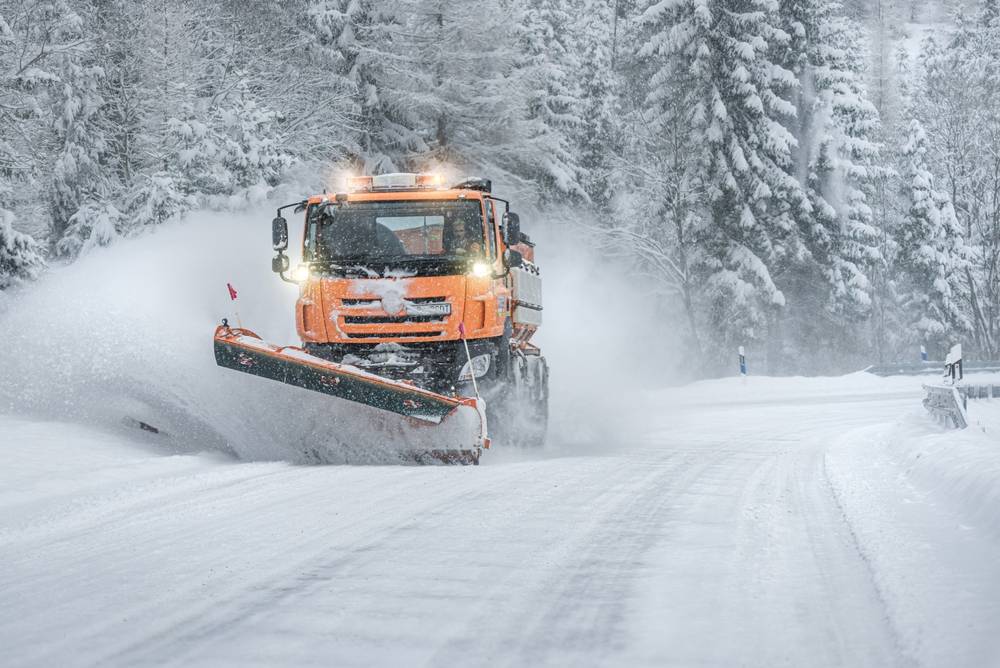
Common operators include the City of Newark’s public works crews on local streets, Essex County on county roads, the State on state highways and interstates, toll road and transportation authorities on the roads they manage, and private contractors hired by apartment complexes, shopping centers, and businesses.
Airport and Port Roads
Roads at Newark Liberty International Airport and Port Newark may be maintained by the Port Authority of New York and New Jersey or its contractors.
Claims against the Port Authority generally require a notice of claim served at least 60 days before suit and a lawsuit filed within one year, so identifying the operator early is especially important there.
Private Contractors
Private plow contractors are generally subject to ordinary negligence rules rather than the protections that may apply to public entities.
Their trucks are often heavy commercial vehicles, and those cases can resemble our Newark truck accident work, with commercial insurance and company records in play.
Highway Plows Working in Teams
On highways, plows often work side by side in staggered lines that block several lanes at once.
In poor visibility, a driver attempting to pass a plow convoy may be struck by a blade or lose control after being hit with snow and ice. Fault may depend on both the plow crew’s warnings and the other driver’s actions.
Salt and Sand Trucks
Spreader trucks that drop salt and sand can throw material into following cars and stop or slow without much warning. Their operators are subject to the same questions about who owned the truck and which rules apply, and the same deadlines may follow.
Can You Bring a Claim Against Newark Over a Plow Crash?
 A claim against a public entity over a plow crash is possible in limited situations, but those entities start with strong protections. In Rochinsky v. State, the New Jersey Supreme Court held that the common-law immunity for snow-removal activities survived the Tort Claims Act.
What the Immunity Usually Covers
The immunity generally applies to decisions about how and when roads are plowed, where snow is piled, and how quickly streets are cleared. Complaints about those choices usually do not support a claim against the city or another public entity, even when the result frustrates residents.
Where Questions Remain
The Rochinsky Court recognized that claims unrelated to snow removal can still proceed, and whether a plow driver’s careless driving falls inside the immunity depends on the facts. What the driver was doing at the moment of the crash can decide whether a claim survives.
The 90-Day Notice
Claims against public entities under the Tort Claims Act generally require written notice within 90 days of the injury, with late notice allowed only in narrow circumstances. The New Jersey Supreme Court’s decision in Beauchamp v. Amedio shows how strictly that deadline is applied by the courts.
How Do Plow Crashes Happen in Newark?
Plow crashes in Newark often happen on narrow residential streets, at busy intersections, and on highway ramps during heavy snow. Common scenarios include:
- A plow backing up on a residential street and striking a car or pedestrian behind it.
- A blade swinging into an oncoming lane while clearing a corner or turn lane.
- A plow pushing snow and ice into a moving car’s windshield.
- A contractor’s plow truck pulling out of a lot into traffic.
- A highway plow changing lanes into a passing car in poor visibility.
Pedestrians and Plows
 When sidewalks are buried, people walk in the street, often in the same lanes plows are working. A pedestrian struck by a plow may receive PIP benefits through their own auto policy or an applicable household policy.
If no such coverage applies, PIP may be available through the insurer of the vehicle that struck them.
Plows and Other Drivers
Some plow-related crashes involve another driver who followed too closely or passed a plow unsafely. New Jersey’s snow removal statute also requires drivers to make reasonable efforts to clear snow and ice from their own vehicles, and those duties can shape how fault is divided.
Riding in a Rideshare or Bus During a Storm
Passengers in a rideshare vehicle or bus struck by a plow may have claims against the plow’s operator and, depending on the facts, the driver of the vehicle they were in. The applicable coverage and deadlines depend on who owned each vehicle.
Is There a Damages Threshold in Claims Against Public Entities?
 Claims against a public entity carry a separate threshold for pain-and-suffering damages. As applied in cases such as Paz v. State, those damages generally require a permanent and substantial loss of a bodily function, permanent disfigurement, or dismemberment, plus more than $3,600 in medical expenses.
Economic losses, such as unpaid medical bills, lost wages, and vehicle repairs, are not subject to that threshold. Your own PIP generally pays medical bills first, regardless of fault, as the state’s auto insurance buyer’s guide explains.
What Should You Do After Being Hit by a Plow in Newark?
Because the operator matters so much, the details you capture at the scene can be some of the most valuable evidence. When you are able, a few steps help.
- Photograph the plow, including any city, county, authority, or company markings and the plate.
- Ask the responding officer which agency or company the plow belongs to.
- Note the exact street, the time, and which way the plow was moving.
- Get medical care promptly and keep every record.
- Contact a lawyer quickly, so any notice can be filed within the deadline.
Why Winter Evidence Is Lost Quickly
Snowbanks, ice, and plow tracks can help show how a crash happened, but those conditions may disappear within days.
Photos taken during the storm, along with weather records and the plow’s own route data, help show the conditions the driver was facing and what the plow was doing.
When Should You Contact a Lawyer About a Plow Crash?
Because a public-entity notice may be due within 90 days, the safest time to talk with a lawyer about a plow crash is within the first few weeks. Early contact leaves time to identify the operator, file the right notices, and preserve records that agencies and contractors may not keep for long.
How Is Fault Shared in a Plow Crash?
A plow operator may argue that the injured driver was following too closely or driving too fast for the storm. Under New Jersey’s comparative negligence statute, compensation is reduced by the injured person’s percentage of fault.
Recovery is barred if the injured person’s fault is greater than the fault of the defendant, or the combined fault of the defendants, against whom recovery is sought
For example, a $140,000 claim with 15% shared fault would become $119,000. Route logs, GPS data, and video often clarify how the plow was moving and whether its lights and alarms were working.
What Compensation Can a Snow Plow Accident Claim Include?
 A snow plow accident claim can include medical expenses beyond PIP, lost wages, reduced earning ability, and the physical pain and limits an injury causes, subject to the lawsuit option on your policy and, for public entities, the Tort Claims Act threshold.
Recovery depends on the operator, the applicable rules, and the losses that can be proven.
Serious Injuries From Heavy Equipment
Plows are heavy vehicles with steel blades, and even a slow-speed impact can cause fractures, head injuries, and spinal injuries. Those injuries may require months of treatment, and the extent of that care can affect both the medical record and the damages claimed.
Winter Injuries and Lost Work
Plow crashes happen during the hardest weeks of winter, when getting to work and treatment is already difficult.
Depending on the circumstances, a claim may include lost income and transportation costs related to medical treatment. Keeping records as those losses occur can make them easier to document.
Our Newark car accident lawyers also handle crashes involving snow plows and other commercial vehicles. Our articles on black ice in Newark and icy Newark roads cover more of the winter hazards drivers face.
If a plow hit you, reach out to our office before the notice deadline approaches.
FAQs for a Newark Snow Plow Accident Claim
What if I do not know who owned the plow?
When the operator of a plow in Newark is unclear, markings, plate numbers, route records, and police reports usually identify it. If several public entities may be responsible, filing notices with each of them is often the safer course.
Does the 90-day deadline apply to private plow companies?
The 90-day notice requirement under the New Jersey Tort Claims Act applies to public entities, not to private plow contractors. Claims against private companies generally follow the usual two-year deadline for injury lawsuits, though the company must still be identified.
What if a plow damaged my parked car overnight?
A Newark car owner whose parked car was struck by a plow can generally pursue a property damage claim against the operator. If the plow belonged to a public entity, the notice requirement generally applies, so photos and prompt action matter.
Can I recover if I was walking in the street because the sidewalk was not cleared?
A pedestrian walking in the street because of an uncleared sidewalk in New Jersey may still have a claim against a plow driver who struck them carelessly. Whether the pedestrian shares any fault depends on the circumstances and the evidence, including where the plow was working.
How long do I have to file a snow plow accident lawsuit in New Jersey?
Most snow plow accident lawsuits against private operators must be filed within two years of the crash. Claims against public entities require written notice much sooner, generally within 90 days, and some authorities have their own rules.
Identify the Plow and Protect Your Claim in Newark

Richard Goldstein, Snow Plow Accident Lawyer
After a plow crash, it is easy to assume the government cannot be held responsible. But the operator may be a private contractor, and different rules may apply.
Identifying who operated the plow early can help you understand your options before a filing deadline expires.
We review snow plow accident claims for free in person, by video, or by phone. Contact us to identify who operated the plow, determine which deadlines apply, and discuss your options.
Results depend on the specific facts of each case, and past outcomes do not predict future results.
