

A crash caused by a drunk driver in East Orange often involves more than one party who may be legally responsible. That single fact separates these cases from ordinary car accident claims.
When the impaired driver carries only minimum insurance, the bar, restaurant, or host who unlawfully served that driver may provide an additional avenue of recovery.
An East Orange drunk driving accident lawyer looks past the driver to find every party and policy that may answer for the crash. Our firm handles that analysis from our office in East Orange, and it usually starts with one question.
Where was the driver drinking before the crash? For the general rules that apply to any collision, our car accident page covers that ground. This page covers what makes a drunk driving claim different.
How Our Firm Looks for Additional Sources of Recovery in a Drunk Driving Case
 Finding an additional responsible party is often what changes the value of a drunk driving case.
An impaired driver with a minimum policy may not cover a serious injury, so the analysis turns to who else contributed to the driver getting behind the wheel. That is where a commercial establishment or a social host may enter the case.
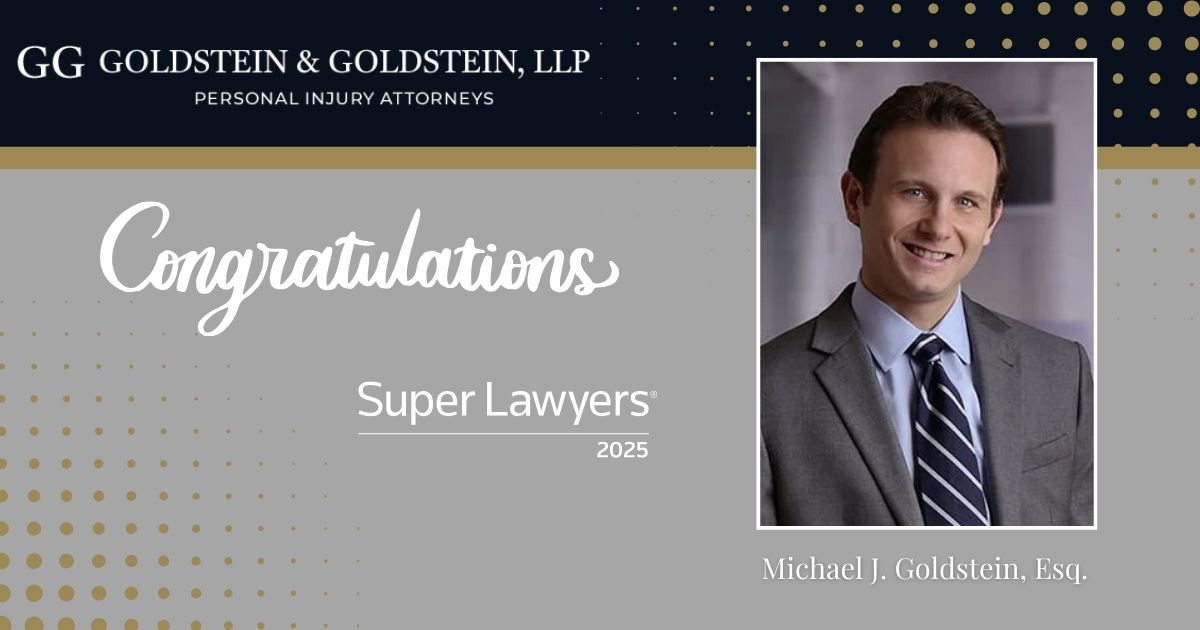
Goldstein & Goldstein, LLP has handled injury claims in East Orange and across Essex County since 1997. Michael J. Goldstein holds the New Jersey Supreme Court Certified Civil Trial Attorney designation, held by a small percentage of civil attorneys statewide.
Our work on these files often includes:
- Tracing the driver’s movements before the crash to identify where alcohol was served
- Sending preservation letters to any licensed establishment involved
- Identifying any commercial liability coverage that may apply to a bar or restaurant
- Evaluating whether punitive damages may apply to the driver’s conduct
Intake takes place in English, Spanish, and Haitian Creole. No Recovery, No Fee.
What Is Dram Shop Liability in New Jersey?
Dram shop liability lets an injured person sue a bar, restaurant, or liquor establishment that served alcohol to a visibly intoxicated patron or to a minor who then caused a crash.
New Jersey’s Licensed Alcoholic Beverage Server Fair Liability Act sets the standard, but serving alcohol to the driver does not automatically make a business liable.
The law requires proof of a specific condition at the time of service. A licensed server may be held responsible when:
- The server provided alcohol to a patron who was visibly intoxicated at the time
- The server provided alcohol to a minor when the server knew or reasonably should have known the person was underage
- The service was a proximate cause of the injuries that followed
Visible intoxication is the key standard for adult patrons. A claim does not succeed simply because the establishment sold the driver a drink at some point in the evening.
Proving visible intoxication usually depends on the records and witnesses that show how much the driver consumed and how they appeared.
The reason dram shop matters is financial. If the establishment has applicable liability coverage, that policy may provide another source of compensation when the drunk driver is underinsured.
That additional source is frequently the difference between a claim that covers a serious injury and one that does not.
How Is Social Host Liability Different From a Bar’s Liability?
Social host liability applies to a private individual who serves alcohol in a non-commercial setting, and the standard is narrower than the commercial dram shop rule. New Jersey’s social host law requires considerably more than simply serving a guest who later drives.
A host may face liability when the statutory requirements are met, including when the host willfully and knowingly provides alcohol to a visibly intoxicated adult guest in the host’s presence or does so under circumstances manifesting reckless disregard for the consequences, when the guest later negligently causes a vehicle crash.
The commercial and social host standards differ in several ways:
- A social host is a private person serving in a home or private setting, not a licensed business
- Social host liability turns on a willful and knowing standard, which is higher than the commercial rule
- Commercial claims add liability for serving minors under the licensed-server statute
- The available insurance differs, with social host claims often involving homeowners coverage
Homeowners insurance may respond to a social host claim, though policy exclusions sometimes apply to alcohol-related liability. The analysis depends on the specific policy and the facts of the gathering. Sorting out which coverage applies is part of building the case.
Can You Get Punitive Damages in an East Orange Drunk Driving Case?
 Punitive damages may be available in a New Jersey drunk driving case, but only when the driver’s conduct rises to wanton and willful disregard for the safety of others. Intoxication alone is not enough.
New Jersey courts require proof of intoxication, causation, and separate aggravating circumstances that show wanton and willful disregard.
Punitive damages are governed by New Jersey’s Punitive Damages Act, which sets both the standard of proof and a cap framework. Punitive damages are generally capped at five times the compensatory damages awarded or $350,000, whichever is greater.
New Jersey law exempts certain cases from that cap, including cases in which the defendant has been convicted of DWI under N.J.S.A. 39:4-50 or refusal under N.J.S.A. 39:4-50.4a.
Why Punitive Damages Are Usually Not Insured
One feature of punitive damages sets them apart from other categories. Punitive damages are typically not covered by liability insurance, because public policy in New Jersey discourages allowing a wrongdoer to shift responsibility for intentional or reckless misconduct to an insurer.
A punitive award generally reaches the driver’s own assets rather than an insurance policy.
That distinction matters when a case involves egregious conduct like drunk driving.
The availability of punitive damages, and the DWI exception to the statutory cap, gives these claims a different posture than an ordinary negligence case.
How Does the DWI Case Affect the Civil Claim?
The DWI proceeding and the civil injury claim run on separate tracks, and developments in the DWI case may help the civil claim.
New Jersey treats DWI as a motor vehicle offense handled in municipal court, while the civil claim for compensation belongs to the injured person. The two proceed independently and apply different standards.
Evidence from the DWI case may also support the civil claim. A guilty plea, conviction, or recorded blood-alcohol result may be relevant to the case against the driver. That overlap is one reason the outcome of the DWI proceeding may matter to an injury claim.
Why Waiting on the DWI Case Can Hurt the Civil Claim
Waiting for the DWI case to conclude before consulting a civil attorney is usually a mistake. Evidence tied to the drinking establishment can disappear quickly, and civil filing deadlines continue to run while the DWI matter is pending.
Acting early can help preserve the records a dram shop claim may depend on, regardless of where the DWI proceeding stands.
What Evidence Matters Most in a Drunk Driving Injury Claim?
 Evidence in a drunk driving case includes proof of where the driver drank and how much, and much of it disappears within days.
Bar records, surveillance video, and receipts are held by third parties who overwrite or discard them on their own schedules. Locking down that evidence early is often what makes a dram shop claim viable.
Records worth preserving quickly in these cases include:
- Bar tabs, receipts, and point-of-sale records showing what the driver was served
- Surveillance video from the establishment showing the driver’s condition
- Credit card statements confirming the driver’s presence and spending
- The police DWI report and field sobriety and breath-test documentation
- Witness accounts from staff and patrons who observed the driver
A preservation letter sent to the licensee immediately puts the establishment on notice to retain these records.
Without that notice, video and sales records are often gone before a claim is even filed. Speed on evidence is one of the strongest predictors of a successful dram shop case.
What If the Drunk Driver Does Not Have Enough Insurance?
Underinsured motorist coverage may provide additional compensation when the drunk driver’s applicable liability limits are lower than the injured person’s UIM limits, subject to the policy and New Jersey law.
Known as UM and UIM, this coverage is part of the injured person’s own auto policy, and it responds when the at-fault driver has too little insurance or none at all. Drunk drivers frequently carry minimum limits, which makes this coverage central to many of these cases.
How UM/UIM Works Alongside a Dram Shop Claim
UM and UIM coverage may work alongside a dram shop claim rather than replacing it. A serious injury case might draw on the driver’s policy, any applicable liquor liability coverage, and the injured person’s own underinsured motorist coverage.
Stacking limits across multiple policies is not permitted under New Jersey law, so the analysis focuses on which policies apply and in what order. Coordinating those sources correctly is part of pursuing the full available recovery.
Verified Case Results
Recoveries obtained on behalf of prior clients include figures at $1.1 million, $825,000, $800,000, $695,000, and $609,000. These reflect the outcomes of specific past cases and are shared as reference points, not predictions.
Every case depends on its own facts, injuries, available insurance, and legal theories, and no attorney can promise a similar result.
No Recovery, No Fee. Case costs, including expert witness fees where appropriate, are advanced by the firm during the case.
FAQs for East Orange Drunk Driving Accident Lawyer Cases
Can I sue the bar that served the drunk driver who hit me?
Yes, you may sue a New Jersey bar or restaurant that served the drunk driver if the establishment served alcohol to a visibly intoxicated patron or to a minor. This is called dram shop liability, and it requires proof of that condition at the time of service.
If the establishment has applicable liability coverage, that policy may provide another source of recovery when the driver is underinsured.
Does a drunk driving case involve more than the driver’s insurance?
Sometimes yes. A drunk driving case may involve additional defendants, such as a bar or social host, and may support punitive damages that an ordinary crash does not.
Those features can create additional avenues of recovery, though the value of any case still depends on the actual injuries, liability, and available coverage.
Can I get punitive damages just because the driver was drunk?
Not automatically. Punitive damages in New Jersey require proof of intoxication, causation, and separate aggravating circumstances showing wanton and willful disregard for the safety of others.
A DWI charge alone does not meet that standard. Whether the conduct qualifies depends on the specific facts of the case.
Should I wait for the DWI case to finish before hiring a lawyer?
No, waiting is usually a mistake. Evidence tied to the drinking establishment, including video and bar records, disappears quickly, and the civil deadlines run separately from the DWI case.
Early action preserves the records a dram shop claim needs, even while the DWI proceeding is still pending.
What happens if the drunk driver who hit me has no insurance?
You may still recover through your own uninsured or underinsured motorist coverage, and possibly through a dram shop claim against the establishment that served the driver.
Drunk drivers often carry minimum limits, so an additional source of recovery is frequently necessary. An attorney can identify which coverage applies to your situation.
Can I sue a private party host who served the drunk driver?
Maybe. New Jersey’s social host law is narrower than the rule for licensed servers. A host may face liability when the statutory requirements are met, including willfully and knowingly serving a visibly intoxicated adult guest who then negligently causes a crash.
The claim may involve the host’s homeowners insurance, though some policies exclude alcohol-related liability.
Move Quickly to Protect Every Claim in Your Drunk Driving Case

Richard Goldstein, Drunk Driving Accident Lawyer
The records that support a dram shop claim have a short shelf life, and any additional source of recovery they support is often what helps make a serious injury case whole. Surveillance footage, bar tabs, and point-of-sale data get erased on the establishment’s timeline, not yours.
Reaching our office through the contact page starts a review at no cost. Bring the police report, the name of any bar or restaurant involved, and the date and location of the crash.
From there, we send the preservation letters, identify every applicable policy, and evaluate whether the driver’s conduct supports a punitive claim.
