

East Orange T-Bone Accident Lawyers
Being hit from the side at an intersection is frightening enough. Hearing the other driver insist that they had the green light can make the days after the crash even more frustrating.
When both drivers tell different stories, the case often comes down to the evidence. Signal timing, video, vehicle data, witness accounts, and the damage to the cars can help show who had the right of way and what happened in the seconds before impact.
Goldstein & Goldstein, LLP represents people injured in T-bone crashes throughout East Orange and Essex County. Our East Orange T-bone accident lawyers work quickly to preserve that evidence and build a clear picture of how the collision happened.
If you were hurt in a side-impact crash, contact us for a free consultation. You pay no attorney’s fee unless we recover compensation for you.
Why East Orange Drivers Choose Goldstein & Goldstein, LLP
T-bone cases often turn on what happened in the seconds before impact, which makes careful investigation and preparation especially important.
Goldstein & Goldstein, LLP has represented injured people in East Orange since 1997, and the lawyers you meet are the lawyers who stay involved in your case.
Richard Goldstein and Michael J. Goldstein lead a team with more than five decades of combined experience.
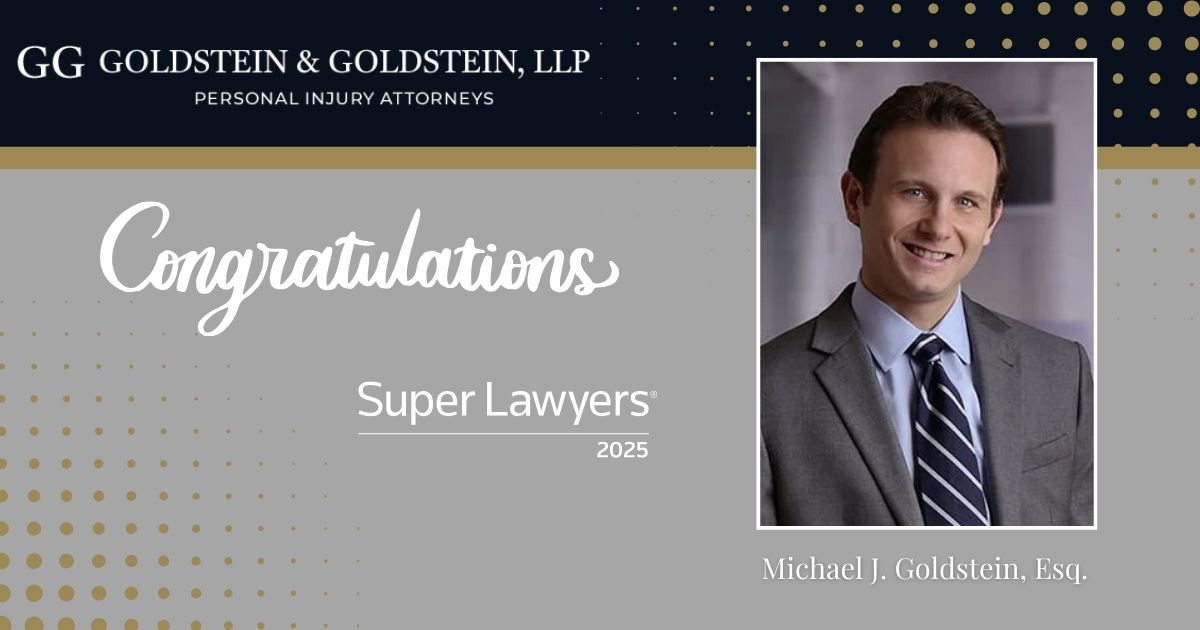
Michael is a New Jersey Supreme Court Certified Civil Trial Attorney, which can be especially important when an insurer disputes who had the right of way or what the traffic signal showed.
Support While Your T-Bone Claim Moves Forward
 Our work does not stop with proving fault. We also help clients stay connected with care through an established network of treating doctors while the claim is being built.
We advance case costs under our No Recovery, No Fee arrangement, and intake is available in English, Spanish, and Haitian Creole.
T-bone claims are part of our broader East Orange car accident and personal injury practice. Our article on dangerous New Jersey intersections also explains some of the risks drivers face at busy crossings.
Who Had the Right of Way?
Who had the right of way often depends on the traffic signal, signs, vehicle positions, and whether either driver was turning. In many T-bone crashes, fault turns on whether one driver failed to yield as New Jersey law required.
The rules differ depending on how the intersection is controlled.
| Type of intersection | Who generally must yield under New Jersey law |
|---|---|
| Traffic signal | The driver facing a red light, and a left-turning driver on a green ball must yield to oncoming traffic |
| Stop sign on one street | The driver at the stop sign, after a full stop, must yield to cross traffic close enough to be a hazard |
| Yield sign | The driver at the yield sign must slow, stop if needed, and yield |
| No signs or signals | A driver must yield to a vehicle already in the intersection; if two arrive together, the driver on the left yields to the driver on the right |
| Left turn anywhere | The turning driver must yield to oncoming vehicles in or near the intersection |
New Jersey’s general intersection and left-turn rules appear in N.J.S.A. 39:4-90, while N.J.S.A. 39:4-144 covers stop and yield signs. Separate traffic laws govern traffic signals.
A violation of these traffic laws can be evidence of negligence, but the injured person must still prove that the crash caused their injuries.
Having the Right of Way Is Not a License to Ignore Danger
Even a driver with a green light must still watch for hazards. Insurers may argue that the injured driver should have seen the other car coming and reacted sooner.
That argument may reduce compensation rather than defeat the claim entirely. Evidence about sightlines, speed, and reaction time can help show whether the injured driver could reasonably have avoided the crash.
How Can We Prove Who Ran the Light in a T-Bone Crash?
 When both drivers claim they had the green light, proving fault often requires evidence beyond their accounts. Our East Orange T-bone accident lawyers may investigate several sources:
- Traffic signal records showing how the lights operated at the time of the crash.
- Surveillance and dashcam footage showing vehicles entering the intersection.
- Vehicle data revealing speed and braking before impact.
- Physical evidence showing the angle and force of the collision.
- Independent witnesses who saw which driver had the right of way.
Together, this evidence can help us reconstruct the crash and determine which driver was at fault.
Can Speed Affect Fault in a T-Bone Crash?
Yes. A driver who speeds up to beat a yellow light or enters an intersection too fast may share or carry fault for the crash. Speed can also make a side-impact collision more severe, increasing the risk of serious injuries.
When speed appears to have played a role, we look at vehicle data, video, witness accounts, and the damage to both cars to determine how fast the driver was traveling and whether that speed contributed to the collision.
Where Do Side-Impact Crashes Happen Around East Orange?
T-bone crashes cluster where traffic crosses traffic, and East Orange has plenty of those points. The setting matters because it shapes what evidence exists and which defenses the other driver will raise.
Busy Commercial Corridors
Signalized intersections along Central Avenue and Main Street carry heavy cross traffic, buses, and turning vehicles at most hours of the day.
Drivers rushing a changing light or turning left across several lanes are behind many side impacts here, and nearby storefront cameras often hold the clearest evidence available.
Residential Stop-Sign Corners
On the city’s residential side streets, parked cars and tight corners can block the view of cross traffic. A driver who rolls a stop sign or pulls out after only a glance can strike a car that had no warning.
The question then becomes whether the driver at the sign stopped and looked as the law requires.
Where Highway Traffic Meets Local Streets
Exits from I-280 and the Garden State Parkway feed drivers directly onto local roads, often at speeds that still feel like highway speeds. Drivers coming off a ramp who misjudge a light or a stop line can broadside cars that are proceeding normally through the intersection.
Why Do Side-Impact Crashes Cause Such Serious Injuries?
 A side impact puts only a door and a window between the occupant and the striking vehicle. Front and rear crashes have crumple zones designed to absorb force, while the side of a car has far less room to do that.
The Near-Side Occupant
The person sitting on the side that was hit usually takes the worst of it.
Pelvic and hip fractures, rib and chest injuries, shoulder injuries, and head injuries from striking the window or door frame are common in side-impact crashes, as are neck and back injuries from the sudden lateral force.
Injuries That Show Up Later
Some side-impact injuries are not obvious at the scene. Adrenaline can mask shoulder, back, and head injuries for hours or days, and a concussion may first appear as headaches, trouble concentrating, or sleep problems.
Getting checked promptly protects your health and creates the medical record that links the injury to the crash.
Passengers and Children
Back-seat passengers, including children in car seats, can be seriously hurt in a broadside crash. Each passenger has their own claim, and a child’s claim is handled with extra protections on deadlines and settlement approval.
How Does Insurance Work After an East Orange T-Bone Crash?
Several insurance policies may apply after a T-bone crash, and each one may cover a different part of the loss. The state’s auto insurance buyer’s guide explains the coverages; what follows is how they usually apply in a side-impact case.
- Your own PIP coverage generally pays your medical bills first, regardless of fault.
- The at-fault driver’s liability coverage pays for losses beyond PIP, up to its limits.
- Your underinsured motorist coverage may provide additional compensation if the at-fault driver’s liability limits are lower than your applicable UIM coverage and do not fully cover your losses.
- Collision coverage or the other driver’s property damage coverage handles your vehicle.
Getting these claims opened in the right order keeps bills paid while the fault question is being resolved. It also prevents a common mistake: giving a recorded statement to the other driver’s insurer before anyone has reviewed the signal and video evidence.
The Lawsuit Option on Your Policy
 If your policy carries the limitation on lawsuit option, recovering for pain and other non-economic losses requires a qualifying injury, such as a displaced fracture or a permanent injury.
A person claiming a permanent injury must support that claim with medical evidence that meets New Jersey law.
In the unpublished 2026 decision Basilone v. Kopec, the court upheld dismissal of non-economic damage claims where the plaintiff lacked the required medical proof of a permanent injury.
What Can a T-Bone Accident Claim Include?
A T-bone claim in New Jersey can include every loss the crash caused, not just the first emergency room bill. Because side-impact injuries often involve fractures and lengthy recoveries, the full value of a claim may not be clear for months.
Medical Care, Now and Later
Surgery, physical therapy, follow-up imaging, and future treatment a doctor expects you to need can all be part of the claim. We gather those opinions from treating physicians so the future costs are documented rather than estimated.
Work, Income, and Daily Life
Lost wages during recovery, reduced ability to earn afterward, and the help you need at home are recoverable losses. So are the limits an injury places on daily activities, subject to the lawsuit option on your policy.
Your Vehicle
Side impacts often bend frames and doors in ways that make a car a total loss. The at-fault driver’s property damage coverage or your own collision coverage may pay to repair or replace the vehicle.
Rental costs may also be covered through the at-fault driver’s insurer or separate rental reimbursement coverage on your own policy.
When Both Drivers Share Some of the Blame
Under New Jersey’s comparative negligence law, compensation is reduced by the injured person’s share of fault. In a case against one other driver, recovery is barred if the injured person is found more at fault than that driver.
If a jury values a claim at $200,000 and finds the injured driver 15% at fault for entering a stale yellow, the recovery would be $170,000. Every percentage point matters, which is why we push back on fault assignments that the evidence does not support.
If the other driver is telling a different story about the light, contact our office and let us find out what the evidence says.
FAQs for an East Orange T-Bone Accident Lawyer
What if there were no witnesses to my T-bone accident?
A T-bone accident in New Jersey without witnesses can still be proven through signal timing records, vehicle data, video, and the physical damage to both cars. Those sources are often more persuasive than eyewitness memory, but they need to be preserved quickly.
Is the driver who turned left always at fault in a New Jersey T-bone crash?
A left-turning driver in New Jersey must yield to oncoming traffic, so that driver is often found at fault, but not always. An oncoming driver who was speeding, ran a red light, or was distracted can share or carry the blame.
Can I still recover if I entered the intersection on a yellow light?
Entering an intersection on a yellow light in New Jersey does not automatically bar recovery, especially if the other driver ran a red or failed to yield. A jury may assign some fault to each driver, which would reduce but not necessarily eliminate the recovery.
What if the police report says the crash was my fault?
A police report reflects what the officer learned at the scene, but it does not decide fault in a New Jersey injury claim. Evidence gathered afterward, such as video or signal records, can support a different conclusion.
How long do I have to file a T-bone accident lawsuit in New Jersey?
Most car accident lawsuits in New Jersey, including T-bone crashes, must be filed within two years of the crash. Claims involving minors, wrongful death, or a public entity follow different timing rules, so confirming the deadline early is important.
Prove Who Had the Right of Way in Your East Orange T-Bone Crash
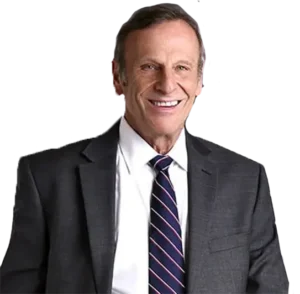
Richard Goldstein, T-Bone Accident Lawyer
When both drivers claim they had the right of way, the strongest case usually comes from the evidence. Signal records, video, vehicle data, and witness accounts can help show who entered the intersection when and whether either driver had time to avoid the crash.
Goldstein & Goldstein, LLP represents people injured in T-bone crashes throughout East Orange and Essex County. We move quickly to preserve evidence, investigate fault, and pursue the compensation available under New Jersey law.
If you were hurt in a side-impact crash, contact us for a free consultation. You pay no attorney’s fee unless we recover compensation for you.
Results depend on the specific facts of each case, and past outcomes do not predict future results.
