

East Orange Multi-Vehicle Accident Lawyers
After a multi-vehicle accident, you may not know which driver caused the first collision or who is responsible for your injuries. When several insurance companies offer conflicting explanations, getting a straight answer about fault can be frustrating.
At Goldstein & Goldstein, LLP, our East Orange multi-vehicle accident lawyers investigate how each collision happened and identify the drivers who may be responsible.
We examine vehicle damage, available video footage, and witness accounts to establish the sequence of impacts and pursue compensation for injured clients.
When multiple insurers are involved, what you say early in the claims process may affect how they assess fault. Contact us for a free review before responding to an adjuster’s request for a recorded statement.
What Changes When You Hire Our Firm After a Multi-Vehicle Crash?
When several drivers may share responsibility for your injuries, managing the insurance claims can become complicated.
Since 1997, our father-and-son firm has helped injured New Jersey residents pursue compensation, including in cases involving multiple vehicles and disputed fault.
| Without Legal Representation | How Goldstein & Goldstein, LLP Helps |
|---|---|
| Multiple insurers may request statements and dispute responsibility. | We communicate with the insurers and address conflicting accounts of the crash. |
| Drivers may disagree about the order of collisions. | We investigate vehicle damage, available video, and other evidence to establish what happened. |
| Settling with one insurer may affect claims against others. | We review settlement terms and work to protect your remaining claims. |
| Finding treatment while handling insurance disputes can be difficult. | We can connect you with our established network of treating doctors. |
| Preparing a case for trial requires substantial legal work. | Partner Michael J. Goldstein is a New Jersey Supreme Court Certified Civil Trial Attorney. |
Partners Richard Goldstein and Michael J. Goldstein bring more than five decades of combined experience. We advance case costs under our No Recovery, No Fee arrangement and offer 24/7 intake in English, Spanish, and Haitian Creole.
Our multi-vehicle accident work is part of our broader East Orange personal injury practice.
How Many Separate Claims Can One Multi-Vehicle Crash Create?
A multi-vehicle accident in New Jersey can lead to claims against several negligent drivers and potentially their employers or other responsible parties. Injured people may also qualify for benefits through their own insurance policies.
The available claims depend on who contributed to the crash, which insurance policies apply, and how the collisions affected your injuries.
| Possible Claim | When It May Apply |
|---|---|
| Against the driver who started the chain reaction | The driver’s speeding, distraction, or following distance contributed to the initial collision. |
| Against another negligent driver | A later driver caused or contributed to another impact. |
| Against a commercial vehicle owner or employer | The circumstances support liability for a company or vehicle owner. |
| Personal injury protection (PIP) benefits | Applicable no-fault coverage pays eligible medical expenses regardless of who caused the crash. |
| Uninsured or underinsured motorist coverage | An applicable policy provides coverage when a responsible driver has no insurance or insufficient coverage. |
Identifying every potential source of compensation matters because a single driver’s insurance may not cover your losses. Before accepting a settlement, it is important to understand how that agreement could affect your remaining claims.
Why Does the Order of Impacts Matter So Much?
 In a multi-vehicle accident, the driver who caused the first collision is not necessarily responsible for every impact that followed. Investigators must determine how each vehicle became involved and whether another driver’s actions contributed to the injuries.
The First Impact and Everything After It
The driver who caused the first collision may be responsible for the whole chain, especially when the later impacts were the predictable result. A driver who arrived later and could not stop in time, however, may be responsible for the impact that driver caused.
The Car in the Middle
A driver who was stopped in traffic and pushed into the car ahead is usually not to blame for that second impact. Insurers for the cars behind may still argue the middle driver was tailgating.
Damage to the front and rear of the middle car, along with timing evidence, usually tells the real story.
Matching Injuries to Impacts
If you were struck twice, your injuries may have worsened with each hit. Medical records and expert opinions can help show how the collisions caused or worsened your injuries. This evidence also helps address disputes over which drivers contributed to your losses.
What Evidence Shows the Sequence of Impacts?
Rebuilding a chain reaction means putting each collision in order with evidence rather than memory. The sources below are listed in roughly the order they tend to disappear.
- Dashcam and storefront video, which is often recorded over within days.
- Event data recorder information, which a repair or salvage can erase.
- The vehicles themselves, whose damage reveals the direction and force of each impact.
- Statements from drivers, passengers, and bystanders, which get less precise over time.
- The police report and any supplemental reports, which may take weeks to finalize.
What if a Truck or Bus Started the Chain?
A truck or bus changes both the evidence and the coverage. Commercial vehicles usually carry larger policies, and their operators may keep onboard video, GPS data, and driver logs that record speed and timing right before the first impact.
A bus run by a public transit agency adds another step, because a claim against a public entity generally requires written notice within 90 days.
When a commercial or public vehicle is involved, identifying its owner is one of the first things we do. Public agencies do not extend that deadline because a claim is complicated.
How Does New Jersey Divide Fault Among Several Drivers?
 New Jersey allows fault to be divided among drivers who contributed to a multi-vehicle accident. Each driver may receive a percentage of responsibility based on their actions, and that percentage can affect how much compensation you recover.
Under N.J.S.A. 2A:15-5.3, a defendant found at least 60% responsible may be required to pay the full amount of recoverable damages. A defendant with less than 60% responsibility generally pays only their assigned share.
For example, suppose a jury values your damages at $300,000 and assigns fault as follows:
- Driver A: 70%
- Driver B: 20%
- You: 10%
Your 10% share would reduce your recovery to $270,000. Because Driver A is at least 60% responsible, that driver could be required to pay the full recoverable amount, even if Driver B cannot pay.
Under New Jersey’s comparative negligence statute, your own fault also matters. You generally can recover compensation when your share of responsibility does not exceed the combined fault of the defendants you are pursuing.
When Fault Is Close
In some chain-reaction crashes, two or more drivers may share substantial responsibility. Evidence of speed, following distance, and the timing of each collision helps establish their respective roles.
Those findings can affect not only how much compensation you receive, but also which defendants may be responsible for paying the judgment.
What Should You Say to Each Insurer?
After a multi-car crash, several insurers may ask for your statement, and each is gathering information to defend its own driver. Keep these points in mind before you talk to any of them. A short call with us first can save a lot of trouble later.
- You generally must cooperate with your own insurer, but you do not have to give a recorded statement to another driver’s insurer.
- Do not guess about the order of impacts or other drivers’ speeds, because early guesses get repeated later.
- Do not sign medical authorizations that open your entire health history.
- Keep a list of every adjuster who contacts you, with the claim number and the driver they represent.
Why Does the Order of Settlements Matter?
 Accepting a settlement from one driver may reduce the amount you can recover from others involved in the crash. New Jersey’s rules on settlement credits and underinsured motorist coverage make it important to review every offer before signing a release.
Credit for a Settling Driver
When one defendant settles in New Jersey, the remaining defendants generally get credit for that defendant’s percentage of fault, not the dollar amount paid. A settlement that looks fine on its own can prove too low if that driver is later found to carry a large share of the blame at trial.
Protecting Underinsured Motorist Coverage
If you may need your own underinsured motorist coverage, your insurer generally must be told before you accept an at-fault driver’s policy limits. Settling without that notice can put the coverage at risk. We handle that notice for you.
When the At-Fault Policies Run Out
When several people are hurt and the at-fault drivers carry low limits, there may not be enough coverage for everyone. Then the timing of each claim, and whether your own underinsured motorist coverage applies, can make a big difference.
Releases
Insurers write the settlement releases, and some go further than they should. Every release needs a careful read to make sure it resolves only the claim against the driver who is paying, and nothing more. A broad release can quietly end claims you meant to keep.
Where Do Multi-Car Crashes Happen in East Orange?
 Sudden stops and congested intersections can contribute to chain-reaction accidents throughout East Orange. Traffic along Central Avenue, Main Street, and I-280 creates conditions where one driver’s failure to maintain a safe following distance may trigger collisions involving several vehicles.
Rear-end chains are common, and the same rules behind an East Orange rear-end collision claim often decide who started the chain.
New Jersey requires a police report when a crash causes injury or significant damage under N.J.S.A. 39:4-130, but these reports sometimes list several vehicles without explaining the sequence.
Our article on liability in Newark multi-vehicle accidents explains how responsibility gets sorted out when the report leaves questions open.
Winter Chain Reactions
Snow and ice can turn one slide into a pileup in seconds. Weather does not excuse drivers who were going too fast or following too closely. Weather records often become part of the evidence about what each driver should have done differently.
FAQs About Multi-Vehicle Crashes in East Orange
What if the police report does not say who caused the chain?
A New Jersey police report for a multi-car crash may not assign fault, or may assign it based on limited information. Fault can still be proven through vehicle data, video, damage analysis, and witness testimony.
What if one of the drivers had no insurance?
When one driver in a New Jersey multi-car crash had no insurance, your own uninsured motorist coverage may cover that driver’s share, if your policy includes it. New Jersey generally does not allow those coverages to be stacked across several policies.
What if a bus or city vehicle was part of the crash?
When a public vehicle is part of a New Jersey multi-car crash, a claim against the public entity generally requires written notice within 90 days. Identifying every vehicle’s owner early protects that claim.
Can passengers bring their own claims?
Passengers in any of the vehicles may have claims against every driver who contributed, including the driver of the car they were in. Passengers are rarely assigned fault, so their claims usually focus on which drivers caused the impacts.
Should I accept the first offer from one of the insurers?
An early offer in a New Jersey multi-vehicle case may not reflect the full extent of your injuries. Accepting it can also affect your claims against the other drivers and your own underinsured motorist coverage. Seeing the full coverage picture first leads to a better decision.
Discuss Your East Orange Multi-Vehicle Crash Claim With an Attorney
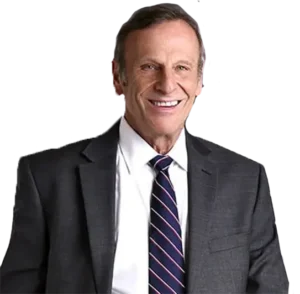
Richard Goldstein, East Orange Multi-Vehicle Accident Lawyer
When several drivers may be responsible for your injuries, you should not have to rely on competing insurance company explanations to understand your rights. Determining fault takes a careful investigation, especially when the order of collisions is disputed.
At Goldstein & Goldstein, LLP, our East Orange multi-vehicle accident lawyers investigate each driver’s role, review available insurance coverage, and pursue compensation from the parties responsible for your injuries.
Our father-and-son firm brings decades of personal injury experience to complex claims involving multiple vehicles.
Contact us for a free consultation. We can review what you know about the crash, discuss your options, and explain how we can help protect your claim.
Results depend on the specific facts of each case, and past outcomes do not predict future results.
