

East Orange Head-On Collision Lawyers
After a head-on crash, one of the hardest parts is not knowing what your recovery will look like.
You may understand how the crash happened, but still have no clear answers about whether you will need another surgery, when you can return to work, or how much of your normal life you will be able to get back.
Goldstein & Goldstein, LLP represents people seriously injured in head-on collisions in East Orange and throughout Essex County.
Our East Orange head-on collision lawyers build these cases around both what the crash has already cost you and what the injuries are likely to cost in the years ahead.
We investigate how the collision happened, preserve the evidence needed to prove fault, and identify the insurance coverage that may apply.
If you are ready to talk about your options, contact us for a free consultation at our Evergreen Place office, by video, or by phone. You pay no attorney’s fee unless we recover compensation for you.
Why Do Families in East Orange Choose Goldstein & Goldstein, LLP?
Head-on cases need a firm that will still be paying attention two years from now. Ours is a father-and-son practice in East Orange, and the lawyers you meet are the lawyers who handle your case.
- Richard Goldstein and Michael J. Goldstein lead a team with more than five decades of combined experience.
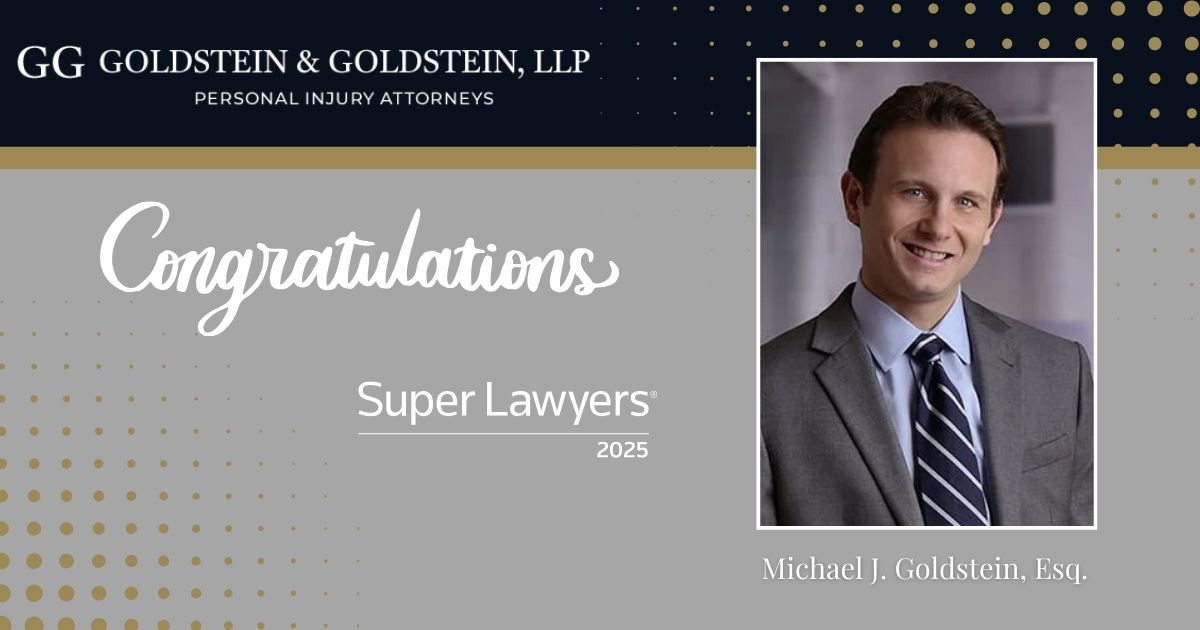
- Michael is a New Jersey Supreme Court Certified Civil Trial Attorney, a distinction held by a small share of New Jersey lawyers.
- We advance case costs, including medical specialists and accident reconstruction, under our No Recovery, No Fee arrangement.
- Intake is available in English, Spanish, and Haitian Creole, with help available 24/7.
Clients have given us 316 Google reviews with a 4.7-star average. Head-on claims sit within the broader East Orange car accident and personal injury work our family has done here since 1997.
Why Are Head-On Collision Claims Built Around the Future?
 Head-on crashes often involve severe forces because the vehicles are moving toward each other at the time of impact. A serious injury claim should account for future care and losses that can be supported by the medical and financial evidence.
Common Head-On Collision Injuries
People hurt in head-on crashes commonly suffer fractures to the legs, pelvis, or wrists from bracing, chest injuries from seat belts and airbags, spinal injuries, and traumatic brain injuries.
Some recover well with time; others face permanent limits, which changes both the value of the claim and the legal rules that apply.
Those injuries also tend to arrive in sequence. A broken leg is treated first, and only months later does it become clear whether a shoulder, a disc, or a concussion will heal on its own. The full value of a head-on claim often cannot be known in the first weeks.
What Future Damages Can Include
A head-on injury claim may include future surgeries and therapy, reduced earning ability, home modifications, and the cost of help with daily tasks.
Proving those losses usually requires doctors, and sometimes economists or life-care planners, to put numbers on what the future is likely to bring.
Lost Earning Capacity
Some head-on injuries do not just interrupt a paycheck; they change what kind of work a person can do.
A warehouse worker who can no longer lift, or a home health aide who cannot stand for a full shift, may have a claim for the difference between what they could have earned and what they can earn now.
How Do Head-On Crashes Happen In and Around East Orange?
Head-on collisions occur when a driver ends up in the wrong lane, and East Orange’s mix of narrow local streets, busy corridors, and highway ramps creates several ways for that to happen. The cause matters because it points to who is responsible and what evidence will prove it.
- A driver drifts over the center line while texting, eating, or reading a map on a phone.
- An impaired or drowsy driver loses the lane on a curve or at night.
- A driver passes on a two-lane road and misjudges the gap.
- A confused driver enters a highway ramp, such as one serving I-280 or the Garden State Parkway, in the wrong direction.
- A driver swerves around a double-parked vehicle on a street like Central Avenue and into oncoming traffic.
In each of these, the key evidence is often physical: lane position, the point of impact, and data from the vehicles’ event recorders. We move quickly to preserve the cars before they are repaired or scrapped.
How We Prove Who Crossed the Line
 Proving fault in a head-on crash usually comes down to showing which vehicle left its lane and why. Drivers on both sides often remember the crash differently, so we rely on evidence that does not depend on memory.
Event Data Recorders
Many modern vehicles store event data that may include speed, braking, throttle use, and other information from the seconds before a crash.
Downloading that data from both cars can show which driver was drifting, accelerating, or braking, but the module has to be preserved before the vehicle is repaired or sent to salvage.
The Road Itself
Gouge marks, debris fields, and where each car came to rest can locate the point of impact relative to the center line. Photographs taken before the scene is cleared, along with the police diagram, often anchor a reconstruction specialist’s analysis.
Video, Phones, and Witnesses
Business and residential cameras are common along East Orange’s commercial corridors, and their footage is often overwritten within days.
When distraction is suspected, phone records obtained through the legal process can show whether the other driver was texting or on a call at the moment of impact.
Why This Work Starts Early
Every one of these sources fades with time. A family dealing with surgery and rehabilitation should not also have to chase down a towing yard or a store manager. We take on that work in the first days after we are hired.
Will the Verbal Threshold Limit My Head-On Claim?
Many New Jersey drivers carry the limitation on lawsuit option, often called the verbal threshold, which limits recovery for pain and other non-economic losses unless the injury falls into certain categories. Head-on injuries meet those categories more often than most crash injuries, but each one still has to be proven with medical evidence.
| Qualifying category under the limitation on lawsuit option | What it usually means in practice |
|---|---|
| Death | A wrongful death claim by the family |
| Dismemberment | Loss of a limb or part of one |
| Significant disfigurement or significant scarring | Visible, lasting scars, often from surgery or lacerations |
| Displaced fractures | Broken bones that moved out of alignment |
| Loss of a fetus | Pregnancy loss caused by the crash |
| Permanent injury | A body part that has not healed and will not heal to function normally |
The categories come from the statute quoted in the Appellate Division’s 2026 decision in Basilone v. Kopec, which also describes the physician certification required to meet them. Economic losses such as medical bills and lost wages are not limited by the threshold.
Why Early Medical Documentation Matters
A permanency claim rests on objective medical evidence, such as imaging and examination findings, tied to the crash. Gaps in treatment or vague records give an insurer room to argue the injury healed, so we help clients stay connected with doctors from our established treating network.
When the At-Fault Driver Does Not Have Enough Insurance
 Serious head-on injuries regularly exceed the other driver’s liability limits. New Jersey’s minimum liability requirements are modest compared with the cost of a long recovery, and the state’s auto insurance buyer’s guide shows how quickly those limits can be outpaced.
When that happens, recovery often comes from more than one source:
- The at-fault driver’s liability policy, up to its limits.
- Your own underinsured motorist (UIM) coverage, if your policy includes it.
- Additional policies, such as an employer’s coverage if the other driver was working.
- Your own PIP coverage for medical expenses, regardless of fault.
Reading your own policy is one of the first things we do, because the UIM limits you chose years ago may matter more to your recovery than anything the other driver carries.
A UIM Claim Has Its Own Rules
An underinsured motorist claim is made against your own insurer, which often handles it as an adversary would rather than as a courtesy to a customer.
Your insurer generally must be notified before you accept the at-fault driver’s policy limits, and skipping that step can put the UIM coverage at risk, so the order in which these claims are handled matters.
Shared Fault in a Head-On Crash
Insurers sometimes argue both drivers drifted toward the center. New Jersey’s comparative negligence statute reduces a recovery by the injured person’s share of fault and bars it only when that share is greater than the other side’s.
Can My Family Recover Too?
 A head-on crash rarely affects only the person who was hurt. New Jersey law can allow a spouse to bring a claim for the loss of companionship and support that follows a serious injury, often called a per quod claim, alongside the injured person’s own case.
When a Head-On Crash Takes a Life
We are deeply sorry if you are reading this because someone you love did not survive. New Jersey allows families to pursue wrongful death and survival claims.
A wrongful death claim can seek compensation for financial support, guidance, and services the family lost, while a survival claim may recover damages the person suffered between the injury and death.
Passengers and Children
Passengers in either vehicle can bring their own claims, and children hurt in a head-on crash have special protections on filing deadlines and settlement approval. Each person’s injuries are evaluated separately, even when everyone was in the same car.
If a head-on crash has changed your plans for the future, contact our office and let us start building a claim that accounts for it.
FAQs for an East Orange Head-On Collision Lawyer
Can I get punitive damages if a drunk driver hit me head-on in New Jersey?
Punitive damages in New Jersey require clear and convincing proof of actual malice or a wanton and willful disregard for others’ safety under the state’s Punitive Damages Act. Drunk driving can support that argument in some cases, but it is not automatic and depends on the evidence.
What if the police report says both drivers crossed the center line?
A New Jersey police report that blames both drivers is not the final word on fault. Accident reconstruction, vehicle data, and the physical evidence at the scene often provide a more precise picture, and a jury decides fault if the case goes to trial.
Should I talk to the other driver’s insurance company after a head-on crash?
Speaking with the other driver’s insurer after a New Jersey head-on crash is not required, and recorded statements are often used to minimize injuries or shift blame. Many people let their lawyer handle those communications while they focus on treatment.
How long do I have to file a head-on collision lawsuit in New Jersey?
Most head-on collision lawsuits in New Jersey must be filed within two years of the crash. Wrongful death claims, claims involving minors, and claims against public entities follow different timing rules, so confirming the deadline early is important.
How is a head-on crash different from a rear-end collision claim?
A head-on crash in New Jersey usually involves higher combined impact forces and more disputed fault than a typical rear-end collision, where the rear driver is often presumed careless.
That combination usually means more medical evidence and more investigation before the claim can be valued.
Plan Your Recovery With an East Orange Head-On Collision Lawyer

Richard Goldstein, Head-On Collision Lawyer
Nobody plans for the year after a head-on crash, and you do not have to decide anything during a first conversation. Our role is to give you a clear picture of the claim so the decisions ahead are easier to make.
Goldstein & Goldstein, LLP offers free, no-obligation consultations. Send us a message and a member of our family firm will follow up to talk through what happened and what your options look like.
Results depend on the specific facts of each case, and no outcome can be predicted in advance.
