

East Orange Intersection Accident Lawyers
After an intersection accident, you may be certain you had the right of way, only to hear the other driver tell a completely different story. When fault is disputed, proving what happened can be difficult, especially if no one stopped to witness the crash.
Not every intersection accident comes down to a driver’s mistake. Poor visibility, malfunctioning traffic signals, or missing road signs may also contribute to a collision. Determining whether the intersection itself played a role can affect who is responsible for your injuries.
At Goldstein & Goldstein, LLP, our East Orange intersection accident lawyers investigate both driver behavior and the intersection itself. We examine right-of-way rules, available video footage, signal records, and road conditions to identify who may be responsible for your injuries.
Tell us where the crash happened. Our father-and-son firm offers free consultations, and you pay no attorney’s fees unless we recover compensation for you.
How Do We Handle an East Orange Intersection Accident Case?
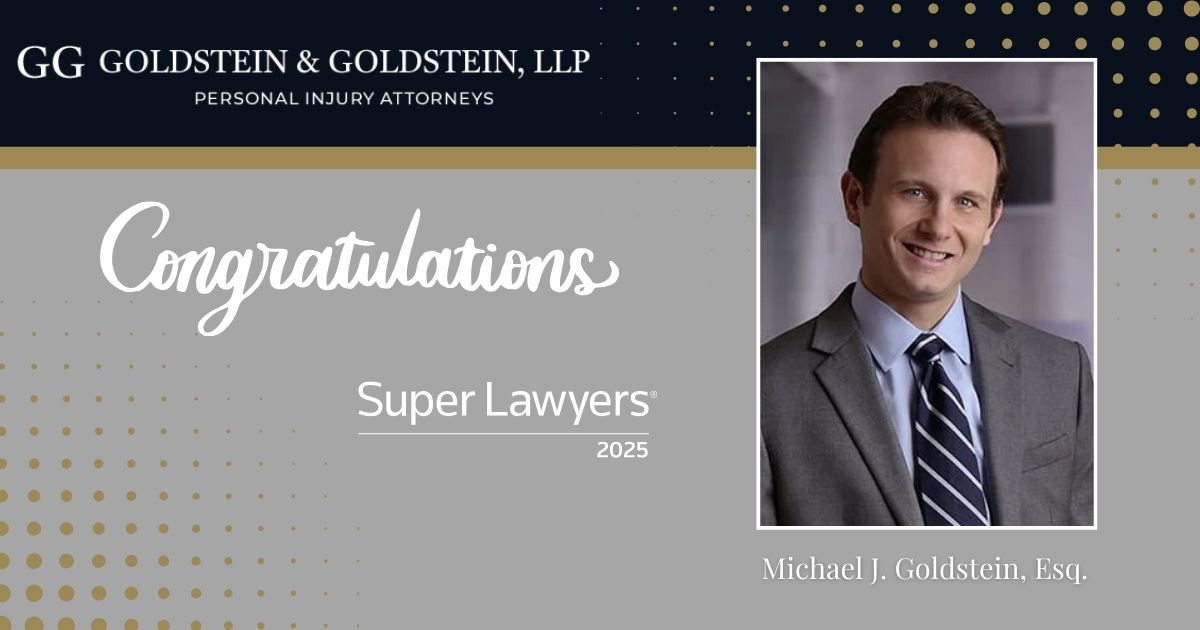 Our father-and-son firm has represented people from this neighborhood since 1997. Our investigation focuses on how the crash happened, who had the right of way, and what evidence can establish responsibility. Here is how we approach these cases.
- We talk with you directly, in English, Spanish, or Haitian Creole, about where the crash happened and how you are doing. If you need care, we can connect you with an established network of treating doctors.
- We identify every driver involved and request the police report, signal records, and nearby video before they are lost.
- We study the intersection itself, including sightlines, signal timing, and signs, to see whether its design contributed.
- Partners Richard Goldstein and Michael J. Goldstein, who bring more than five decades of combined experience, evaluate the claim with you as your treatment continues.
- If an insurer will not make a fair offer, Michael, a New Jersey Supreme Court Certified Civil Trial Attorney, prepares the case for court.
We pay the costs of that work up front under our No Recovery, No Fee arrangement. Intersection claims are part of the broader East Orange personal injury practice our family has built here.
Who Has the Right of Way in Common Intersection Crashes?
Most intersection claims start with one question. Which driver had to yield? New Jersey’s answer depends on how the intersection is controlled and what each driver was doing.
| Situation | Who generally must yield | Source of the rule |
|---|---|---|
| A driver at a stop sign entering a through street | The driver at the stop sign, after stopping | N.J.S.A. 39:4-144 |
| A driver turning left on a green light | The turning driver, to oncoming traffic close enough to be a hazard | N.J.S.A. 39:4-90 |
| Two drivers reaching an uncontrolled intersection together | The driver on the left, to the driver on the right | N.J.S.A. 39:4-90 |
| A driver approaching a dark traffic signal | Every driver, who must treat it as a stop intersection | N.J.S.A. 39:4-81 |
| A driver turning while a pedestrian is in the crosswalk | The driver, who must stop and stay stopped for the pedestrian | State pedestrian law |
Breaking one of these rules is strong evidence of negligence, but it does not settle the case alone. You still have to show that the violation caused the crash and your injuries, and the other driver may argue that you made a mistake too.
Pedestrians and Turning Drivers
Drivers turning at East Orange corners often watch for gaps in oncoming traffic and never look at the crosswalk. The state’s summary of driver and pedestrian duties explains the rule that drivers must stop and stay stopped for people in a marked crosswalk.
Right Turns on Red
New Jersey allows a right turn on red after a full stop unless a sign says otherwise, but the turning driver must still yield to cross traffic and pedestrians. Drivers who treat the turn as a rolling yield cause many crashes with people on foot and with cars crossing on the green.
Why Are Left Turns Behind So Many Intersection Disputes?
A left turn asks a driver to judge oncoming speed, watch the far crosswalk, and finish before the light changes, all at once. When any one of those judgments fails, the crash happens in the middle of the intersection.
Insurers usually start by blaming the turning driver, since New Jersey law generally requires that driver to yield. That is not always where the analysis ends.
An oncoming driver who was speeding or failed to pay attention may share responsibility for the collision, even when the other driver was making a left turn.
The Stale Green
A driver who enters an intersection on green to make a left turn may still be completing the turn when the signal changes. An oncoming driver who speeds up through that change can be responsible for the collision, even though the turning driver was still moving.
When Does the Intersection Itself Contribute to a Crash?
 Poor intersection design or maintenance can contribute to repeated crashes, especially when drivers have limited visibility or unclear traffic controls. When that happens, the intersection’s condition becomes part of the evidence, even if a driver’s mistake was the immediate cause.
Sightlines Blocked by Parked Cars and Buildings
Many East Orange side streets have parked cars right up to the corner. A driver who stops at the line may not see cross traffic without creeping forward, and a crash at that moment raises questions about both drivers and the parking layout.
Signal Timing and Malfunctions
A yellow that is too short, a left-turn arrow that ends abruptly, or a signal stuck on one phase can push drivers into each other’s path. Signal timing records may show how the lights were programmed to operate.
When combined with video or other evidence, they can help establish which driver had the right of way.
Faded Markings and Missing Signs
Worn stop lines, faded crosswalks, and signs that have been knocked down make it harder for drivers to know who must yield. Photos taken soon after the crash, before anyone repairs them, are often the strongest proof of those conditions.
What Must Drivers Do at a Dark or Flashing Signal?
Power outages and malfunctions regularly confuse drivers at East Orange intersections. Under N.J.S.A. 39:4-81, a driver approaching an unlit traffic signal must treat the intersection as a stop intersection and stop as they would at a stop sign before going on.
Flashing signals have their own rules. A flashing red generally means come to a full stop, and a flashing yellow means proceed with caution. A driver who rolls through a dark or flashing signal without slowing can be held responsible for the crash that follows.
Can You Bring a Claim Against the City or County?
 A claim against the government entity responsible for an intersection is possible, but it is difficult. In East Orange, the city, Essex County, or the State may maintain an intersection, based on which roads meet there, so the first step is finding the right agency.
A claim based on a dangerous intersection generally has to prove four things.
- The intersection was in a dangerous condition at the time of the crash.
- The dangerous condition was created by a public employee’s negligent or wrongful conduct, or the agency knew or should have known about the condition in time to address it.
- The agency’s failure to act was palpably unreasonable, a higher standard than ordinary negligence.
- The dangerous condition contributed to the crash and your injuries.
Written notice to the public entity is generally due within 90 days. The New Jersey Supreme Court’s decision in Beauchamp v. Amedio shows how strictly courts apply that deadline, so we evaluate a possible public-entity claim early, even when another driver seems to be at fault.
How Is the Order of Entry Proven?
When drivers disagree about who entered an intersection first or who had the green light, their statements alone may not establish what happened. We look for independent evidence that can help reconstruct the collision.
Signal Timing Records
Signal timing records may show how traffic lights were programmed to change. When combined with video, witness accounts, or other evidence, they can help establish which driver had the green light.
Video From Central Avenue and Main Street
Storefront cameras along East Orange’s busiest corridors often catch intersections from more than one angle. Many record over their footage within days, so we request it as soon as we are hired.
Vehicle Damage and Impact Angles
Where each car was struck, and at what angle, tells us which car was already in the intersection. Event data recorders add speed and braking details from the last seconds before impact.
Distraction
 A driver looking at a phone can miss a stop sign or a signal change entirely. Phone records obtained through the legal process can prove it, and our East Orange distracted driving page explains those cases further.
Witnesses Waiting at the Corner
Drivers stopped at the light and people waiting to cross are usually watching the signal closely. Their accounts are some of the most persuasive evidence in an intersection case. Get their names and numbers if you safely can, before they leave.
What Happens When a Cyclist Is Hit at an East Orange Intersection?
Cyclists in New Jersey generally have the same rights and duties as drivers, so a driver who fails to yield to a cyclist can be held responsible just as if the cyclist were in a car. Turning drivers who never check for a rider coming straight through cause many of these crashes.
For PIP purposes, New Jersey generally treats a person on an ordinary bicycle like a pedestrian. That can open coverage through a household auto policy or the vehicle that struck the rider.
Motorized e-bikes and scooters are treated differently, and those claims need a careful look at every policy involved.
How Is Fault Divided When Both Drivers Made Mistakes?
Many intersection crashes involve two mistakes, such as one driver speeding toward a yellow while another turns left. Under New Jersey’s comparative negligence law, your compensation is reduced by your percentage of fault.
You generally cannot recover damages if you are more than 50% responsible for the crash.
FAQs for an East Orange Intersection Accident Claim
What if the other driver says I ran the stop sign?
When New Jersey drivers dispute who ran a stop sign, video, damage patterns, and independent witnesses usually carry more weight than either driver’s word. The police report may record what each driver said at the scene, but it is not the final word on fault.
Who is at fault when parked cars block the view at a corner?
A New Jersey driver pulling out from a stop sign must still yield even when parked cars block the view, which usually means creeping forward carefully. The through driver’s speed and attention also count, so fault may be shared.
Can I sue the city if an intersection is known to be dangerous?
A New Jersey public entity can sometimes be held responsible for a dangerous intersection, but the claim must meet the palpably unreasonable standard and requires written notice, generally within 90 days. Most intersection claims proceed against the drivers, with a public entity added only when the evidence supports it.
Will a red light camera have recorded the crash?
New Jersey’s red light camera pilot program ended in 2014, so a city enforcement camera is unlikely to have recorded an East Orange intersection crash. Proof usually comes from signal records, private video, and vehicle data instead.
Get Answers About Your East Orange Intersection Crash
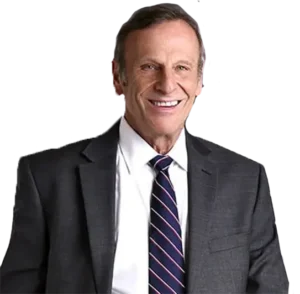
Richard Goldstein, East Orange Intersection Accident Lawyer
When a crash involves broken traffic signals, missing signs, or poor intersection design, determining who is responsible may require looking beyond the police report. You may not even realize that the intersection itself contributed to your injuries.
If a dangerous road condition played a role, you may have as little as 90 days to notify the responsible government agency of your claim.
Our team can investigate what happened and identify potential claims before that deadline passes. Contact Goldstein & Goldstein, LLP for a free consultation.
Results depend on the specific facts of each case, and past outcomes do not predict future results.
