

Newark Red Light Accident Lawyers
On Newark’s wide, multi-lane intersections, a driver who runs a red light can hit cars in several lanes, a bus pulling away from the curb, or people in the crosswalk.
If that driver hit you, you may already know the light was red, yet still have to prove it. Since 2014, when New Jersey’s red light camera pilot program ended, that proof comes from signal timing records, storefront and bus cameras, and vehicle data. Our Newark red light accident lawyers know where to find each one.
Footage from cameras along Broad Street and McCarter Highway does not last long. Contact us early.
What Can You Count On When You Hire Us for a Red Light Case?
Since 1997, our father-and-son firm has represented injured people from Newark and across Essex County. In a red light case, three commitments shape how we work.
Signal Records Requested Early
Timing and phase records from the agency that runs the light reveal exactly when each signal changed. We request them at the start, so the question of who had the red is answered with records rather than memories.
Video Requested Before It Disappears
Newark’s commercial corridors are full of storefront, transit, and bus cameras, but many record over their footage within days. We send preservation requests quickly, and we connect clients with an established network of treating doctors while that work goes on.
A Trial Attorney Behind the Case
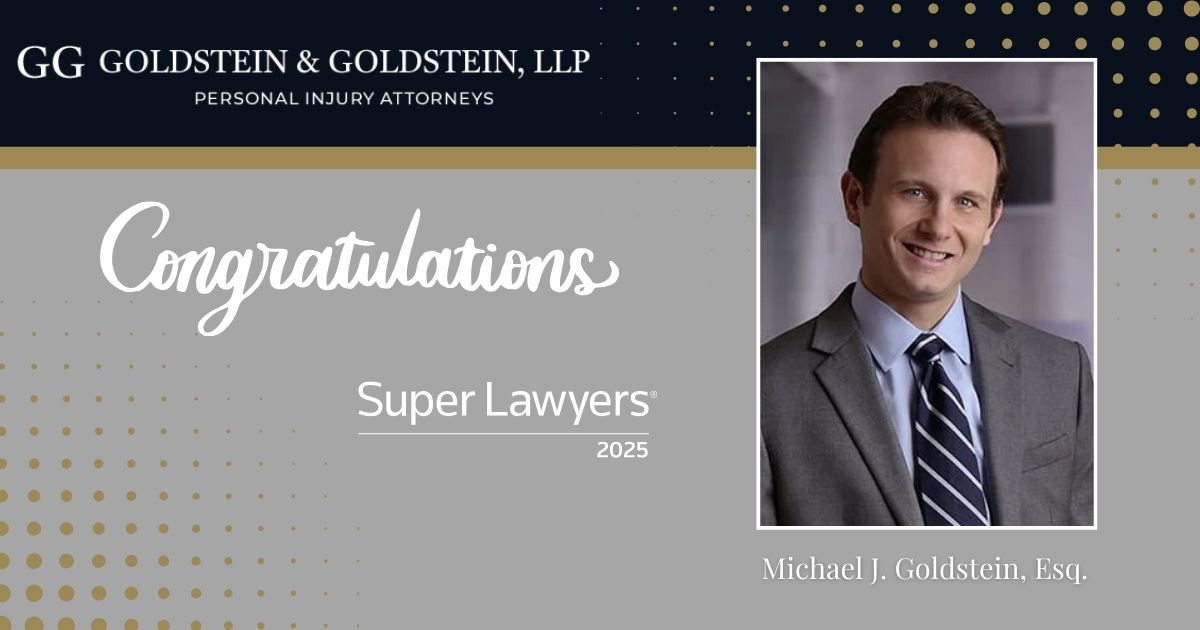 Partners Richard Goldstein and Michael J. Goldstein bring more than five decades of combined experience, and Michael is a New Jersey Supreme Court Certified Civil Trial Attorney. We pay case costs up front under our No Recovery, No Fee arrangement and take calls 24/7 in English, Spanish, and Haitian Creole. Red light claims are part of our broader personal injury work for Newark residents.
Why Are Red Light Crashes So Serious on Newark Streets?
A driver who runs a red is usually trying to beat the light, so the impact often comes at full speed. On Newark’s wide intersections, that speed meets cross traffic broadside and people on foot with little protection.
Several Lanes of Cross Traffic
A driver running the light across several lanes may clear the first one only to hit a car in the second or third. The person hurt may never have seen the runner coming, because a bus or truck in the nearer lane blocked the view.
Turn Arrows and Protected Phases
Many Newark intersections use left-turn arrows and protected phases, which mean more signal changes and more chances for confusion. A driver who keeps turning after the arrow ends, or runs a red while others have a protected turn, can cause a serious crash.
Buses and Pedestrians
Bus stops near corners mean riders are often crossing just as a light changes. New Jersey requires drivers to stop and stay stopped for pedestrians in crosswalks, as the state’s summary of driver and pedestrian duties explains. Our Newark pedestrian accident team handles those claims as well.
Children and Older Pedestrians
Children and older adults crossing wide intersections may still be in the crosswalk when a driver runs the red. Drivers are expected to watch for slower walkers, and a runner who hits someone finishing a crossing has a hard time explaining why.
Late-Night Red Light Running
Late at night, light traffic tempts some drivers to treat red lights as optional on long stretches of Broad Street, McCarter Highway, and other corridors. Those crashes tend to happen at higher speed and are more likely to involve impaired or exhausted drivers.
Trucks and Delivery Vans
Large vehicles need more room to stop, and a truck or van driver who misjudges a yellow can end up in the intersection after the light changes. The company’s commercial policy, its vehicle data, and its driver logs may become central to the claim.
Which Evidence Disappears First After a Newark Red Light Crash?
 Without enforcement cameras, proof now comes from other sources, as the state’s information on the former red light camera program explains. Those sources do not last equally long, and the order they vanish in decides which requests we send first.
- Storefront, building, and doorbell camera footage, which is often recorded over within days.
- Dashcam video from other drivers, rideshare vehicles, and delivery fleets, which is usually stored on a rolling basis.
- Bus camera footage, which each operator keeps for a different length of time.
- Event data recorder information, which a repair, salvage, or sale can erase.
- Witness memories, which get less precise with every week that passes.
- Signal timing records, which are often kept longer but still have to be requested from the right agency.
Matching the Evidence to the Moment of Impact
Each source is useful only if we know the exact time of the crash. We usually pin that down from 911 call logs, the vehicles’ own data, phone records, and time-stamped video, then line the records up against the signal phases.
Witnesses Waiting at the Light
Drivers stopped on the runner’s side of the intersection saw the same red the runner ignored. Bus riders and pedestrians waiting at the corner are often strong witnesses too, because they were watching the signal to know when to cross.
Who Else Can Be Responsible When a Driver Runs a Red?
The driver who ran the light is usually responsible, but others can share the blame. Based on the facts, responsibility may extend to the following.
- An employer, if the runner was driving a company or delivery vehicle for work.
- A rideshare company’s insurer, if the runner was driving for Uber or Lyft at the time, which our Newark Uber and Lyft page explains.
- A bus or transit operator, if a bus ran the light.
- Another driver who was speeding or distracted and contributed to the crash.
- In limited cases, the agency responsible for a malfunctioning signal.
Public Vehicles and Malfunctioning Signals
A claim against a public entity, whether over a public bus or a broken signal, generally requires written notice within 90 days, a deadline the New Jersey Supreme Court discussed in Beauchamp v. Amedio. These claims also face a higher legal standard than ordinary negligence, so we evaluate them early in every case.
What if the Runner Was Fleeing Police, Racing, or Impaired?
 Some of the most serious red light crashes involve drivers fleeing a police stop, racing another car, or driving impaired. Each situation raises its own questions.
Police Pursuits
When a driver fleeing police runs a light and causes a crash, the fleeing driver is the main responsible party. Claims involving the pursuing officers or their agency face special immunities under New Jersey law, so they turn heavily on the specific facts and the pursuit policies in place.
Racing and Extreme Recklessness
When the driver who ran the light was racing, driving with extreme recklessness, or highly intoxicated, punitive damages may be available. New Jersey’s Punitive Damages Act requires clear and convincing proof of actual malice or wanton and willful disregard for others’ safety.
When the Police Report Is Unclear
A busy Newark intersection can produce a short report that assigns no fault or leans on conflicting statements taken at the scene. Evidence gathered afterward, like signal records and video, can fill those gaps and support a different conclusion.
How Do Insurers Handle Red Light Claims?
Insurers sometimes accept fault fast when the evidence is clear, and fight hard when it is not. Either way, a few patterns are worth knowing.
Early Offers
 A quick offer may arrive before anyone knows the full extent of your injuries, and many come with a release that ends the claim. Have a lawyer review any offer before you accept it, so you do not settle too early, before treatment is complete.
Recorded Statements
The other driver’s insurer may ask for a recorded statement about the color of the light and how fast you were going. Those answers can be used later to argue you entered on a late yellow, so talk with a lawyer before giving one.
When Both Drivers Claim the Green
When each driver insists the light was green and the evidence is mixed, a jury may find that both share some blame. Under New Jersey’s comparative negligence statute, your recovery is reduced by your share and barred only if your share is greater than the other driver’s. That is where signal records and video earn their keep.
What Injuries Do Red Light Crashes Cause?
Red light crashes often strike the side of a car, where there is far less protection than in the front or rear, or a person on foot with none at all. Fractures, head injuries, spinal injuries, and internal injuries are common, and recovery can take months.
Those injuries often need future care that has to be estimated as part of the claim. We work with your doctors to document what that care will likely involve, so the claim covers the full effect of the crash and not just the bills already paid.
What if the Driver Who Ran the Light Drove Away?
Some drivers keep going after they run a light and cause a crash. If the driver cannot be identified, your own uninsured motorist coverage may cover the claim, and the cameras along Newark’s corridors often offer the strongest chance of finding the car later. Our Newark hit and run page covers those claims.
FAQs for a Newark Red Light Accident Claim
Red light cases usually come down to proof, and these questions show it.
Does Newark have red light cameras that can prove my case?
New Jersey’s red light camera pilot program ended in 2014, so proof in a Newark red light case usually comes from signal records, private and transit cameras, vehicle data, and witnesses, not a city camera. Those sources need to be requested quickly, before footage is recorded over.
What if I was turning left on a green arrow when I was hit?
A New Jersey driver turning on a protected green arrow generally has the right of way over traffic facing a red. An oncoming or cross-street driver who ran the red can be responsible, and signal timing records can confirm which phase was active.
What if a bus ran the red light?
When a bus runs a red light in New Jersey, the operator may be responsible, and onboard video and driver records help prove it. A claim against a public transit operator generally requires written notice within 90 days, so the bus needs to be identified early.
What if I was a passenger in the car that ran the light?
A passenger in a New Jersey car that ran a red light can generally claim against that driver’s insurer, and possibly the other driver’s insurer if both contributed. Passengers are rarely found at fault for how the car was driven.
Can a pedestrian recover if the driver ran the red?
A pedestrian hit by a driver who ran a red light in New Jersey can generally pursue the driver, and PIP may be available through a household policy or the vehicle that struck them. Crossing with the walk signal usually weighs heavily in the pedestrian’s favor when fault is decided.
Our articles on what to do after a red light accident and road deaths caused by red light runners offer more background.
Find Out Who Ran the Light in Your Newark Crash

Richard Goldstein, Newark Red Light Accident Lawyer
You should not have to win an argument about the color of a light to get your bills paid. When two drivers disagree, the answer usually sits in records neither of them controls, such as signal timing logs and footage from nearby cameras.
Requesting those records is part of our work, at no upfront cost to you. Share the details and we will start requesting the records from your intersection before they are lost. Red light claims sit within our broader Newark car accident practice.
Results depend on the specific facts of each case, and past outcomes do not predict future results.
