

Our Family Has Given A Voice To The Injured For Over 50 Combined Years
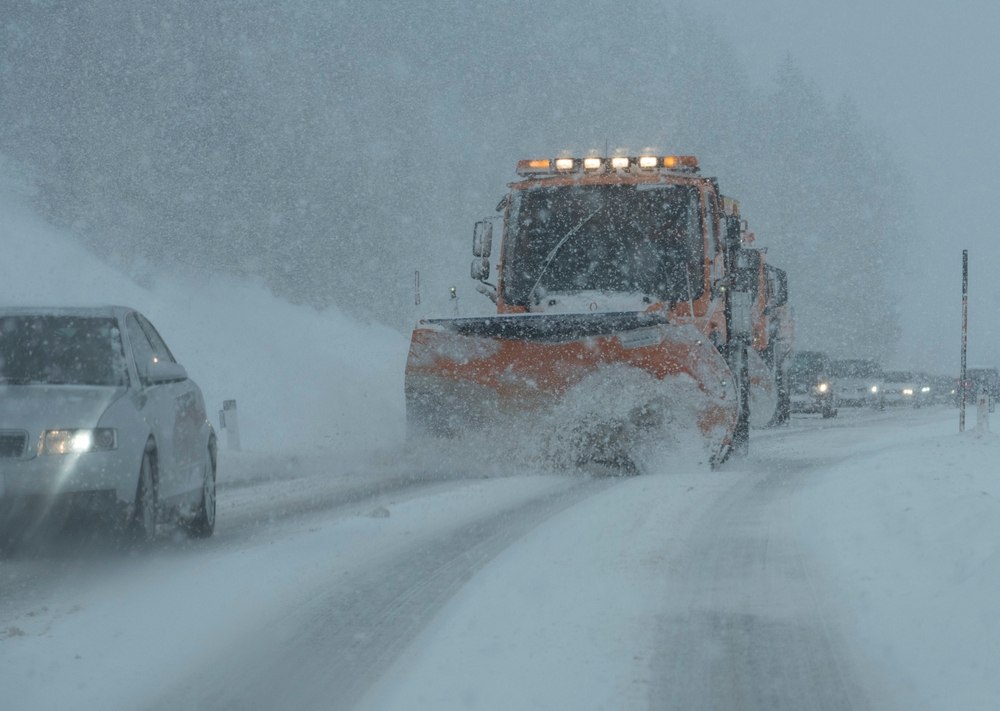
Quick Answer: Who Is Liable When a Snow Plow Hits You in New Jersey?
Liability for a New Jersey snow plow accident depends on who ran the plow: private contractors are generally held to ordinary negligence rules, while towns, counties, and the State have special immunities and a 90-day notice deadline.
When a snow plow causes an accident in New Jersey, identifying who operated it can determine whether an injured person has a viable claim.
Liability for a New Jersey snow plow accident often depends less on what the driver did wrong than on who sent the plow out. A town’s plow and a contractor’s plow are judged by very different rules.
Most drivers in Newark and East Orange never think about this until a storm. Then a plow sideswipes a parked car on a side street or backs into an intersection on a county road.
Only then does the injured person learn that a government defendant brings deadlines and defenses an ordinary driver never has.
Sorting out ownership early is what keeps a claim alive. If a plow struck you or your car anywhere in Essex County this winter, our family firm can look at who operated it and what deadline already started running, at no cost to you.
Key Takeaways About New Jersey Snow Plow Accident Liability
- New Jersey public entities have long held a common-law immunity for their snow-removal activities, which the state Supreme Court preserved after the Tort Claims Act took effect.
- The New Jersey Tort Claims Act generally requires injured people to file a notice of claim with the responsible public entity within 90 days of when the claim accrues.
- Pain-and-suffering damages against a public entity generally require a permanent injury and more than $3,600 in medical treatment expenses.
- Private plow contractors do not receive the Tort Claims Act’s protections simply by plowing, so claims against them generally follow ordinary negligence rules.
How Does Snow Plow Ownership Affect Liability in New Jersey?
The first question in any New Jersey snow plow accident is who owned, operated, or hired the plow. The answer controls which deadlines apply, which defenses the defendant can raise, and which damages are available.
| Who ran the plow | Rules that generally apply | When to act |
|---|---|---|
| A city, township, or county public works crew | Tort Claims Act, plus common-law snow-removal immunity and the statutory weather immunity | Written notice within 90 days |
| The State, including crews on state highways such as I-280 and Route 21 | Tort Claims Act and the same immunities | Written notice within 90 days |
| A private contractor hired by a town | Ordinary negligence for the contractor; the town’s role is analyzed under the Tort Claims Act | Notice to the town within 90 days if the town may share fault |
| A private company plowing a business lot or driveway | Ordinary negligence and comparative fault | Lawsuit generally within two years |
Plows on the same block can belong to different operators in the same storm. A Newark street, a county road, and the Garden State Parkway ramp near East Orange can each answer to a different agency, so the truck’s markings, plate, and route matter more than the street name.
The police crash report is often the first place that ownership gets written down, and it is worth reading closely rather than assuming it is right. Officers working a storm scene sometimes record only a plate number or a department name.
A contractor’s truck can also carry a municipal decal while working under a private contract, so we confirm ownership through records rather than appearances.
Can You Sue a Town for a Snow Plow Accident in New Jersey?
Suing a New Jersey town over its snow plow is possible in limited situations, but the town starts with strong defenses. In Rochinsky v. State, Department of Transportation, the Supreme Court held that the snow-removal immunity first recognized in 1968 survived the Tort Claims Act.
Courts still describe that protection broadly. A 2021 Appellate Division decision involving Englewood described it as absolute immunity for snow-removal activities.
As a result, claims about how a road was plowed, where snow was piled, or how quickly a street was cleared usually fail against a public entity.
Where the Snow-Removal Immunity Stops
 The immunity covers snow removal, not every act by someone who happens to work for public works.
The Rochinsky Court recognized that a claim unrelated to snow-removal activity can still proceed under the Tort Claims Act, and it left room for conduct so egregious that immunity would defeat its own purpose.
Whether a public plow driver who simply drives carelessly, such as rear-ending a stopped car on the way to a route, falls inside or outside that protection is a fact-specific question.
We look closely at what the driver was doing at the moment of impact, because that detail can decide whether the claim survives.
The Separate Weather Immunity
A second statutory protection shields public entities from injuries caused solely by the effect of weather on the use of streets and highways.
The word “solely” carries weight: when a crash results from weather combined with something else, such as a plow’s conduct or a defect in the road, the weather immunity may not resolve the case by itself. When another driver, rather than a plow, caused a winter crash, ordinary negligence rules apply, as our East Orange snow and ice car accident lawyers explain.
What Is the Deadline to File a Claim Against a Public Snow Plow?
In New Jersey, an injured person generally must file a notice of claim with the responsible public entity within 90 days or risk losing the right to recover compensation.
The state Supreme Court’s decision in Beauchamp v. Amedio walks through how strictly courts apply that deadline and its narrow exception.
The timeline usually runs like this:
- The injured person files a notice of claim with the responsible public entity within 90 days of the crash.
- If that window is missed, a Superior Court judge may allow late notice within one year, but only on a showing of extraordinary circumstances and only if the entity is not substantially prejudiced.
- The public entity generally has six months after receiving the notice before a lawsuit can be filed.
- The lawsuit itself generally must be filed within two years of the crash.
Ninety days passes quickly when someone is in treatment through January and February. Filing notice with every entity that may share responsibility, rather than guessing at one, is often the safer course.
What Changes When the Plow Belonged to a Private Contractor?
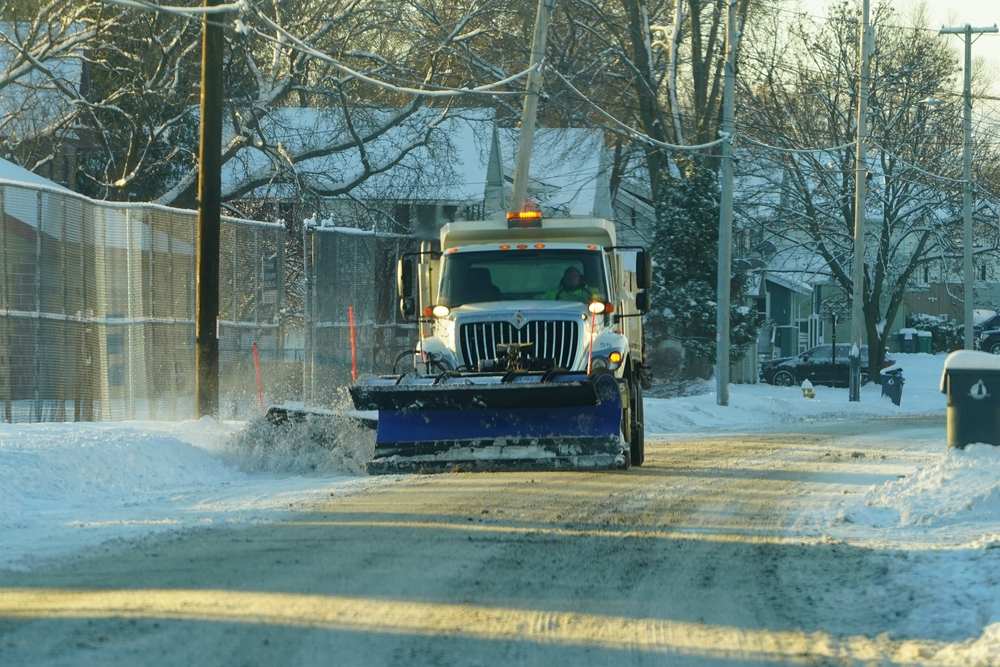 A private plow contractor in New Jersey is generally treated like any other negligent driver or business.
There is no 90-day notice requirement for a claim against the contractor itself, and the snow-removal immunity that protects towns was built around the burden on public entities, not private companies.
Contractors also tend to run large trucks for long shifts during storms, which raises the same fatigue, visibility, and backing hazards found in other commercial vehicle cases.
When a plow is mounted on a heavy truck, our approach often resembles how we handle commercial truck claims.
When a Town Hires the Contractor
Many municipalities supplement their own crews with hired plow operators during heavy storms.
Whether a contractor can borrow any part of the town’s protection depends on the contract and the facts, and the town’s own responsibility for the hiring decision is analyzed separately under the Tort Claims Act.
How Shared Fault Is Calculated
New Jersey’s comparative negligence law reduces compensation by the injured person’s percentage of fault. Recovery is generally barred if that percentage exceeds 50%, based on the fault of the defendant or defendants combined.
If a jury values a claim at $100,000 and finds the driver 20% at fault for following too closely behind a plow, the recovery would be $80,000.
Do the Damages Rules Change in a Public Plow Case?
The damages available against a New Jersey public entity are narrower than against a private defendant. Under the Tort Claims Act, as applied in cases such as Paz v. State,
pain-and-suffering damages generally require proof of a permanent and substantial loss of a bodily function, permanent disfigurement, or dismemberment, along with more than $3,600 in medical treatment expenses.
Economic losses are not subject to that pain-and-suffering threshold. In a public plow case, those losses typically include:
- Medical expenses that other coverage has not paid.
- Lost wages and, for lasting injuries, reduced earning ability.
- Vehicle repair or replacement costs.
- Out-of-pocket costs such as rides to treatment and household help.
A person hurt by a public plow may also face the auto insurance lawsuit limitation on their own policy, so the two thresholds sometimes have to be analyzed together.
Why the Answer Can Differ for Two People in the Same Crash
Two occupants of the same car can end up with different damages outcomes, because permanency and treatment costs are measured person by person.
A short recovery may support a claim for economic losses only, while a lasting injury may open the door to the full range of damages.
What Evidence Can Help Prove a New Jersey Snow Plow Accident Claim?
Plow accident evidence disappears faster than in most crashes, because the storm conditions that explain the collision are gone within days. Useful sources often include:
- Route assignments and shift logs showing which crew or contractor covered the street.
- Vehicle tracking data, since many public and private fleets record plow locations and speeds.
- Dashcam or body-mounted camera footage from the plow, nearby businesses, or other drivers.
- Photos of the plow’s lights, blade position, and markings, and of the road surface after the crash.
- Weather records showing when snowfall started and stopped, which can test a weather-immunity defense.
Preservation letters to a public agency or contractor can help protect this material before routine retention policies erase it. Snow piled at the scene can also matter, though a snow-related fall on a sidewalk or lot follows separate premises liability rules.
FAQs About Snow Plow Accident Liability in New Jersey
Can I file a claim if a snow plow damaged my parked car in New Jersey?
A New Jersey car owner can pursue a property damage claim when a plow strikes a parked vehicle, but the same ownership rules apply. If a town’s plow caused the damage, the 90-day notice requirement generally applies to the property claim as well, and snow-removal immunity may be raised as a defense.
Will my own car insurance pay if a snow plow hits me in New Jersey?
New Jersey drivers can generally use their own PIP coverage for medical expenses after a snow plow collision, because PIP pays regardless of fault.
Collision coverage, if the driver carries it, can usually repair the car first, with the insurer later seeking repayment from the responsible party.
What if I do not know which agency the snow plow belonged to?
When the operator of a plow in New Jersey is unclear, the safer approach is often to file notices with every public entity that may have been responsible. Truck markings, plate numbers, the road’s jurisdiction, and public works route maps usually narrow the list.
How long do I have to sue a private snow plow company in New Jersey?
A New Jersey injury lawsuit against a private plow contractor generally must be filed within two years of the crash. A town’s possible involvement does not extend that deadline, and exceptions can apply, so confirming the date early helps protect both claims.
Can a plow throwing snow or ice into traffic lead to a claim?
A plow that throws snow, ice, or debris into traffic can give rise to a New Jersey claim, but the defenses depend on who operated it.
Against a public entity, a court may treat the spray as part of snow removal and apply immunity, while a private contractor would generally face ordinary negligence rules.
Act Quickly After a Snow Plow Accident in New Jersey

Richard Goldstein, Snow Plow Accident Lawyer
A New Jersey snow plow claim can depend on what happens in the first few weeks. Government notice deadlines may start immediately, while tracking data, route records, and other evidence can disappear quickly.
Goldstein & Goldstein, LLP has served Newark, East Orange, and the rest of Essex County since 1997, and our father-and-son partners know how winter storms play out on local roads, from plowed highways to the stretches covered in our article on black ice in Newark.
Contact us for a free consultation in English, Spanish, or Haitian Creole. We work on a No Recovery, No Fee basis and advance case costs.
Every case depends on its facts. This article provides general information, not legal advice.
