


Our Family Has Given A Voice To The Injured For Over 50 Combined Years
Newark Pedestrian Accident Lawyers
Most people struck by a car in Newark expect the driver’s insurance to pay their hospital bills. In New Jersey, that is usually not how it works.
Under the state’s no-fault law, the pedestrian’s own auto insurance policy generally pays medical benefits first, even though the pedestrian was on foot. A resident relative’s policy may pay if the pedestrian has none of their own.
That priority rule sends bills to the wrong place, delays treatment authorizations, and confuses everyone involved.
A Newark pedestrian accident lawyer is usually the person who sorts the coverage order out before the bills go to collections and before the at-fault driver’s carrier starts asking for a recorded statement.
What Our Office Handles When a Pedestrian Case Comes In
The first move on a pedestrian case is almost always insurance triage, not litigation. Before any lawsuit talk, someone has to identify which PIP policy is primary, open the claim with that carrier, put the at-fault driver’s insurer on notice, and confirm whether uninsured motorist coverage may need to activate.
Getting that sequence right in the first two weeks affects everything that follows.
Richard Goldstein and Michael J. Goldstein have run this practice from East Orange since 1997, and Michael is a New Jersey Supreme Court Certified Civil Trial Attorney, a designation held by a small percentage of civil attorneys in the state.
Alongside the insurance work, our office coordinates follow-up treatment through an established doctor network, which matters when PIP limits run low and a pedestrian client still needs orthopedic care, neurology, or physical therapy to move forward with the case.
Intake is available in English, Spanish, and Haitian Creole, and cases are handled on contingency with costs advanced by our office.
What Does New Jersey’s Crosswalk Law Actually Require Drivers to Do?
 New Jersey’s crosswalk law requires drivers to stop and remain stopped for a pedestrian in a marked crosswalk, and to yield to a pedestrian in an unmarked crosswalk at an intersection.
The rule is set by N.J.S.A. 39:4-36, often called the stop-and-stay-stopped law. Every intersection without a marked crosswalk is treated as an unmarked crosswalk under state guidance.
Penalties for drivers who violate the statute carry weight beyond a routine traffic ticket:
- A fine that begins at $200 plus court costs
- Two motor vehicle points on the driver’s record
- Up to 15 days of community service in the court’s discretion
- Insurance surcharges tied to the conviction
- Higher fines when the violation results in serious bodily injury
The statute also creates a permissive inference in civil cases. When a vehicle strikes a pedestrian inside a marked or unmarked crosswalk at an intersection, jurors may infer that the driver failed to exercise due care.
That inference does not decide a case, but it often shapes how the insurance carrier evaluates one.
Local geography matters here. Wide corridors like Broad Street, Market Street, and McCarter Highway concentrate turning-vehicle conflicts with both pedestrians and bicycle riders, and mid-block crossings in the Ironbound and near the university corridors are a common backdrop for these claims.
How Does Personal Injury Protection Pay When a Pedestrian Is Struck by a Car in NJ?
Personal Injury Protection, known as PIP, is the no-fault medical coverage every New Jersey auto policy must carry under N.J.S.A. 39:6A-4. PIP pays medical bills, and optional wage and essential-service benefits, without regard to fault. When a pedestrian is struck by a car, PIP still applies, and the priority order sends bills to a specific policy first.
The priority follows a chain that is set by statute, not by choice:
| Order | Whose PIP Pays First | Why |
|---|---|---|
| 1 | The pedestrian’s own NJ auto policy | Primary source under state priority rules |
| 2 | A resident relative’s NJ auto policy | Applies when the pedestrian has no policy |
| 3 | The vehicle owner’s policy | Applies when no household coverage exists |
| 4 | The Unsatisfied Claim and Judgment Fund | Statutory fund for those with no coverage anywhere |
The table is a general guide. Which policy actually pays depends on household composition, whether the pedestrian is a named insured, and the specific policy language.
Standard NJ policies default to $250,000 in PIP, but many drivers select lower limits, including $15,000, to reduce premiums.
A serious pedestrian injury frequently exhausts a low PIP limit within weeks, which raises the question of what comes next in the coverage stack.
What If the Pedestrian Was Crossing Outside the Crosswalk?
 Crossing outside a crosswalk does not end a New Jersey pedestrian case on its own. New Jersey follows a modified comparative negligence rule under N.J.S.A. 2A:15-5.1, which allows recovery as long as the injured person is not more than 50 percent at fault.
Any recovery is reduced by the pedestrian’s share of the fault.
Two facts about NJSA 39:4-36 matter here. The statute expressly preserves a driver’s duty to exercise due care for any pedestrian on the roadway, regardless of where that pedestrian was.
And nearly every intersection without paint on the ground is treated as an unmarked crosswalk under state guidance, which broadens the number of collisions that fall inside the crosswalk framework.
In practice, the comparative-fault fight usually turns on driver speed, sightlines, distraction, whether the pedestrian was visible for a meaningful distance, and whether the point of impact was truly mid-block or near an intersection that qualified as an unmarked crosswalk.
Those facts get developed from the crash scene, not from the police narrative alone.
What Coverage Applies When the Driver Fled or Was Uninsured?
Hit-and-run and uninsured-driver pedestrian cases in New Jersey usually proceed through uninsured motorist coverage, known as UM.
UM benefits are part of the pedestrian’s own auto policy, and they may cover bodily injury damages when the striking driver is unidentified, uninsured, or cannot be located.
Coverage pathways in these situations usually include:
- Uninsured motorist bodily injury coverage on the pedestrian’s own auto policy
- Uninsured motorist coverage on a resident relative’s NJ auto policy when the pedestrian has none
- The New Jersey Unsatisfied Claim and Judgment Fund for qualifying claimants with no other coverage
- PIP benefits from the same priority chain that applies to any pedestrian struck by a car
UM claims come with their own procedural requirements, including prompt notice to the carrier and, in hit-and-run cases, evidence of physical contact and a timely police report. Missing those requirements is one of the fastest ways to shrink an otherwise strong case.
What Evidence Matters Most in the First Days After a Pedestrian Is Struck?
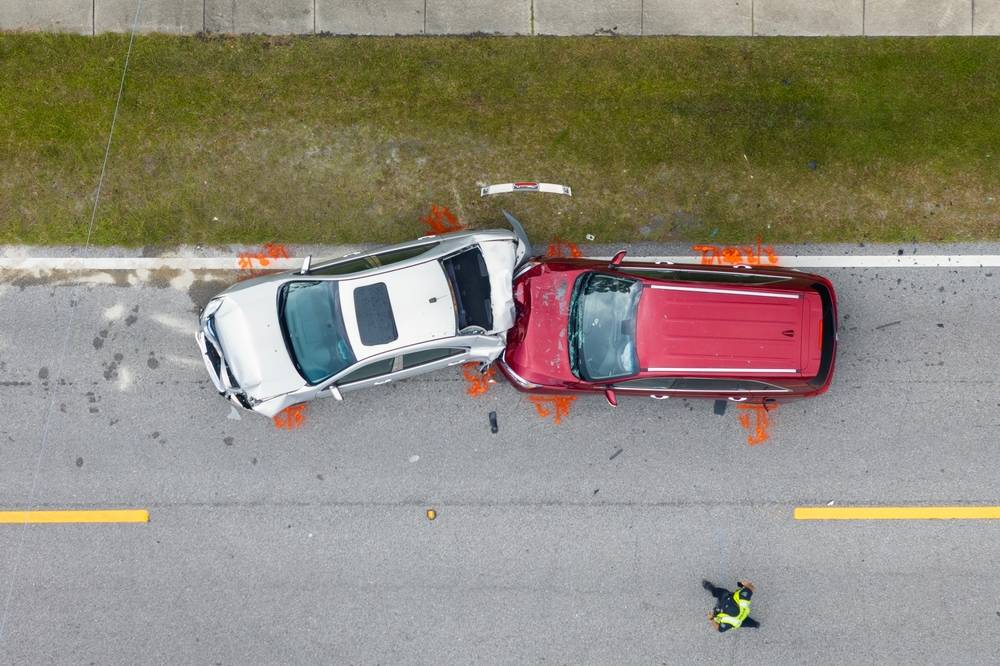 Evidence in a pedestrian case fades quickly, and much of what wins the case is gathered in the first week. Surveillance video from nearby businesses, private homes, and city cameras often overwrites within days.
Physical marks at the scene, such as skid patterns, debris, and impact points, may be gone by the next rain.
Priorities in the first days generally include:
- Preservation letters to businesses and property owners near the point of impact to hold video
- Copies of the police crash report and any accompanying investigation notes
- Photos of the vehicle, the roadway, sightlines, and lighting conditions
- Names and contact information for every witness identified at the scene
- Written notice to the pedestrian’s own auto carrier to open a PIP file promptly
Getting these pieces in place early is often what separates a well-documented liability case from a he-said-she-said dispute six months later.
The at-fault driver’s insurer starts building its file the day of the crash. The pedestrian’s side has to start too.
What Damages May a Struck Pedestrian Recover in New Jersey?
A struck pedestrian in New Jersey may recover economic damages, non-economic damages, and, in appropriate cases, damages for permanent injury.
Economic damages cover medical bills that exceed PIP, future medical care, lost wages, and reduced future earning capacity. Non-economic damages cover pain, suffering, and loss of enjoyment of life.
Pain-and-suffering claims may be limited by the tort option selected on the applicable auto policy. Under N.J.S.A. 39:6A-8, the limitation-on-lawsuit option, often called the verbal threshold, restricts non-economic recovery unless the injury meets one of several statutory categories.
Catastrophic pedestrian injuries change the damages picture entirely. Categories that come up in these cases include:
- Traumatic brain injury with lasting cognitive or behavioral effects
- Spinal cord injury with partial or full loss of function
- Multiple orthopedic fractures requiring surgery and long-term rehabilitation
- Amputations or crush injuries to the lower extremities
- Complex regional pain syndrome and other chronic pain conditions
Damages in catastrophic injury cases often require life-care planning, vocational assessments, and detailed medical projections. Building those numbers takes time, and starting the work early tends to produce more accurate demands.
FAQs for Newark Pedestrian Accident Lawyer Cases
Who pays my medical bills if I was hit by a car while walking in Newark?
Your own New Jersey auto insurance policy generally pays your medical bills first under the state’s no-fault law, even though you were on foot.
If you do not own a car, a resident relative’s NJ auto policy may cover you. The at-fault driver’s insurance typically does not pay the medical bills directly, though a liability claim against that driver is a separate matter.
Can I still sue the driver if PIP is paying my medical bills?
Yes, PIP benefits and a bodily injury claim against the at-fault driver are two separate tracks. PIP handles medical treatment on a no-fault basis.
A liability claim seeks pain and suffering and other damages from the driver and their insurer. Whether the pain-and-suffering claim is limited depends on the tort option on the applicable policy.
Do I have a case if I was crossing outside the crosswalk?
Maybe. New Jersey follows a modified comparative negligence rule that allows recovery as long as you are not more than 50 percent at fault, with your recovery reduced by your share.
Drivers also owe a general duty of due care to pedestrians anywhere on the roadway, which keeps many mid-block cases viable.
What if the driver drove off and was never identified?
You may still have a claim through uninsured motorist coverage on your own NJ auto policy, or a resident relative’s policy if you have none.
Hit-and-run claims come with prompt-notice requirements and, in some situations, a requirement of physical contact with the vehicle. Missing the notice window can shrink or bar the claim.
What if my PIP runs out before I finish treatment?
Medical bills that exceed your PIP limits may be recoverable from the at-fault driver in a bodily injury claim, subject to statutory rules and any applicable fee schedule limits.
Coordination with health insurance and provider billing is usually part of the case. Access to a doctor network that will continue treatment while the case develops matters here.
Sort the Insurance Chain Before It Sorts You

Richard Goldstein, Pedestrian Accident Attorney
The single most useful move after a pedestrian crash in New Jersey is figuring out which insurance company is supposed to pay first, and getting the claim opened there before treatment authorizations start bouncing.
That answer is set by statute, not by which carrier’s number the hospital handed you at discharge.
Our office in East Orange takes pedestrian cases and other car accidents from across the Newark corridor and greater Essex County. Bring us the crash report, the discharge paperwork, any photos from the scene or the vehicle, and the declarations pages of every auto policy in your household.
From there, we identify the primary PIP carrier, open the file, put the at-fault driver’s insurer on notice, and evaluate whether a UM claim needs to run in parallel.
A case review is available in English, Spanish, or Haitian Creole through our contact page, on a contingency basis, with costs advanced by our office.
Our East Orange Office
60 Evergreen Place
Suite 502
East Orange, NJ 07018
