

East Orange Delivery Truck Accident Lawyer
When a delivery driver causes a crash, the delivery company or another business may also share responsibility. As a result, more than one insurance policy may provide coverage for your injuries.
Goldstein & Goldstein, LLP represents people injured in delivery truck accidents throughout East Orange and Essex County.
Our East Orange delivery truck accident lawyers investigate who owned the vehicle, who employed or contracted with the driver, who controlled the delivery work, and which insurance policies apply.
Our family firm has represented injured people in East Orange since 1997. From our office on Evergreen Place, we handle crashes involving delivery vans, box trucks, commercial vehicles, and drivers using personal cars for delivery work.
If a delivery vehicle hurt you, tell us what happened and we will review it for free.
Why Do East Orange Families Choose Goldstein & Goldstein, LLP After Delivery Crashes?
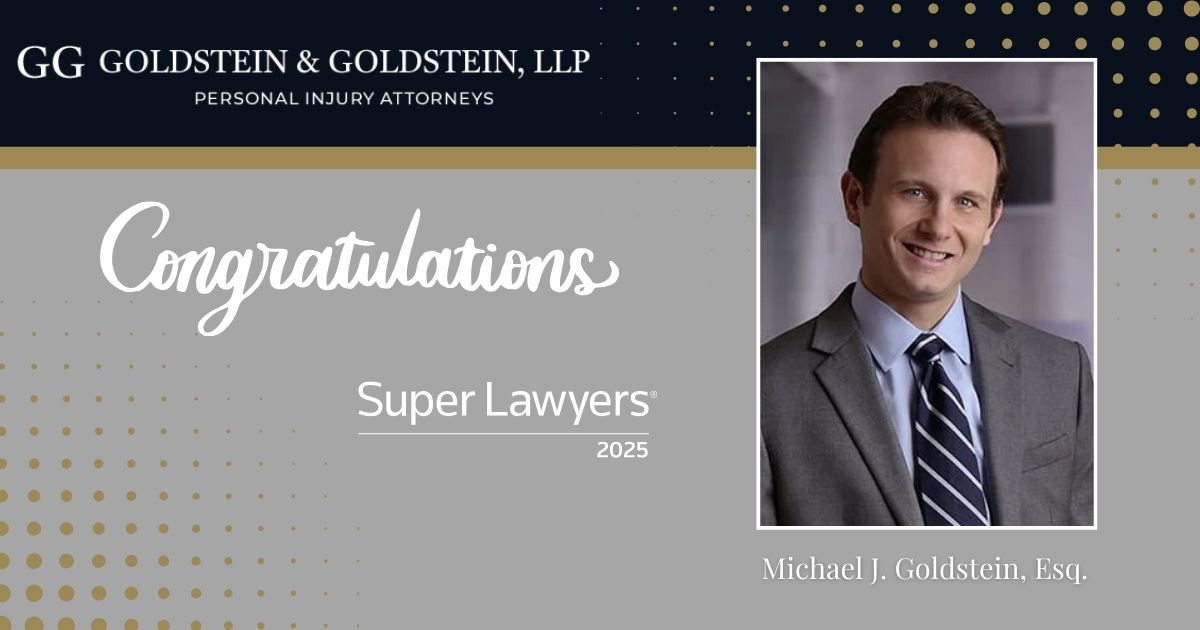 As a father-and-son firm, we make sure the people who hire us talk directly with the lawyers working on their cases. We are not a high-volume operation passing files between offices.
- Richard Goldstein and Michael J. Goldstein lead a team with more than five decades of combined experience in New Jersey injury law.
- Michael is a New Jersey Supreme Court Certified Civil Trial Attorney, an important credential when a commercial injury case requires litigation.
- Past recoveries include $1.1 million, $825,000, and $800,000, each tied to its own facts and none a prediction for another case.
- We work on a No Recovery, No Fee basis, advance case costs, and take calls in English, Spanish, and Haitian Creole.
We also work with an established network of treating doctors, which helps clients start care while the insurance questions are still being sorted out.
Delivery crashes are one part of the broader East Orange personal injury practice our family has built here. When an insurer calls with an early offer, we can tell you whether it reflects what the claim is actually worth.
Who Is Responsible When a Delivery Van Hits You in East Orange?
Responsibility for a delivery vehicle crash in East Orange often reaches beyond the driver to the company that employed or contracted with them. Which company that is depends on how the delivery operation is structured, and that structure is usually invisible from the street.
| How the delivery was arranged | Who may be responsible | Insurance we look for |
|---|---|---|
| Driver employed directly by a carrier such as a parcel company | The driver and the employer | The employer’s commercial auto policy |
| Driver employed by a contracted delivery company working for a large retailer | The driver, the delivery company, and possibly the retailer depending on its control | The delivery company’s commercial policy and any coverage the retailer requires or provides |
| Independent driver using a personal car through an app | The driver, and possibly the platform depending on its coverage terms | The driver’s personal policy and any platform coverage that applies while on a delivery |
| Local business delivering its own goods | The driver and the business | The business’s commercial auto policy |
Getting this wrong early can mean months spent negotiating with an insurer that never owed the claim. We request the driver’s employment and contract records so the right companies are on notice from the start.
When a Company Answers for Its Driver
New Jersey generally holds an employer responsible for an employee’s negligent driving within the scope of the job. Contractor arrangements complicate that rule but do not end the inquiry.
A company can also be liable for its own choices, such as hiring an unsafe driver or setting routes that push drivers to rush.
How Do Delivery Truck Accidents Happen in East Orange?
 Delivery crashes in East Orange often happen on neighborhood streets where drivers make frequent stops around parked cars, intersections, homes, and businesses.
Drivers making frequent stops may repeatedly encounter situations that require backing, pulling into traffic, double-parking, or stopping suddenly.
Common patterns include:
- Double-parking and then pulling back into traffic without checking mirrors.
- Backing out of a driveway, alley, or loading area with limited rear visibility.
- Opening a door or ramp into a lane, a bike path, or a pedestrian’s path.
- Rolling through stop signs while reading a handheld device or route screen.
- Making sudden stops or U-turns after missing an address.
Identifying the specific driving mistake helps connect the evidence to the conduct that caused the crash.
Why Route Pressure Shows Up in the Evidence
Delivery work often involves tight routes and frequent stops, especially during the holiday season or when bad weather causes delays.
When a driver is running behind, route records may help explain whether time pressure contributed to unsafe choices such as double-parking, rushing a turn, or failing to check carefully before moving.
Pedestrians and Cyclists Face the Most Danger
People on foot near Brick Church Station, Main Street storefronts, and residential blocks off Central Avenue are often the ones hurt when a van backs up or swings around a parked car.
Those cases also raise different insurance questions than an East Orange car accident between two drivers, so our East Orange truck accident work starts with sorting out coverage.
Do Federal Trucking Rules Apply to Delivery Vans?
Federal trucking rules may apply depending on the vehicle’s size, weight, and whether it operates in interstate commerce. The Federal Motor Carrier Safety Administration’s commercial motor vehicle definition generally reaches vehicles of 10,001 pounds or more used in interstate commerce.
Many cargo vans fall below the federal threshold, while larger box trucks and straight trucks are more likely to meet it.
When the federal rules apply, they may require records such as driver qualification files, hours-of-service logs, and inspection reports that can help show whether the company followed applicable safety requirements.
When the Federal Rules Do Not Apply
A lighter van outside the federal rules is still governed by New Jersey’s traffic laws and the general duty of care every driver owes. The company’s own policies, training materials, and performance expectations can fill the gap, and we request them in discovery when a case is filed.
What Evidence Can Help Prove a Delivery Truck Accident Claim?
 Delivery fleets may generate detailed crash data through GPS systems, cameras, telematics, route records, and driver logs. Much of it is controlled by the company, and much of it is overwritten on a schedule unless someone asks for it to be preserved.
- Telematics and GPS records showing speed, braking, and location in the seconds before impact.
- Forward-facing or driver-facing camera footage, which many fleets now use.
- Route assignments, stop counts, and delivery time targets for that shift.
- The driver’s hiring file, training records, and prior incident history.
- Vehicle maintenance logs, especially for brakes, mirrors, and backup cameras.
We send preservation letters quickly so this material is still there when it matters. A company that loses evidence after receiving notice can face consequences in court, which gives the request real weight.
Your Own Records Still Matter
Photos of the vehicle’s markings and plate, the names of any witnesses, and your medical records from the first visit forward fill in what the company’s data cannot show. Our earlier article on what to do if an Amazon driver hits you covers some of the same first steps.
How Does Shared Fault Affect a New Jersey Delivery Truck Claim?
Delivery companies sometimes argue the injured person was partly to blame, such as by walking behind a double-parked van or driving too close.
Under New Jersey’s comparative negligence statute, a recovery is reduced by the injured person’s share of fault and barred only if that share is greater than the defendants’ combined share.
If a claim is worth $300,000 and a jury assigns the injured driver 10% of the fault, the recovery would be $270,000.
Because even a small percentage of fault reduces the recovery, disputing an unsupported fault allegation can significantly affect the amount a client receives.
What Happens After You Hire Us?
 A delivery truck case moves through predictable stages, and knowing them makes the months ahead less uncertain. The timing depends mostly on your medical recovery, not on how fast the insurer wants to close its file.
The First Month
We notify every company and insurer involved, send preservation letters for telematics and camera footage, and get your PIP claim working so treatment is not delayed. This is also when we gather the police report and witness information while memories are fresh.
While You Are Treating
We track your medical records, bills, and missed work as they come in, and we keep insurers from pressuring you into a recorded statement or an early release. If your doctors recommend surgery or a specialist, the claim waits for that picture rather than settling around it.
Demand and Negotiation
Once your recovery has leveled off, we prepare a demand that documents the full cost of the crash, from medical expenses to the ways the injury changed your daily life. Many delivery cases resolve here, especially when the evidence of the driver’s conduct is clear.
If a Lawsuit Becomes Necessary
When a company or insurer will not make a fair offer, we file suit, and East Orange cases are typically heard in the Superior Court, Law Division, in Newark. Filing opens discovery, which is how we obtain the driver files, route data, and company policies that insurers rarely hand over voluntarily.
When a delivery company’s insurer starts calling, contact our office first and let us handle that conversation.
FAQs for an East Orange Delivery Truck Accident Lawyer
Can I sue Amazon if an Amazon delivery van hit me in New Jersey?
A claim after an Amazon-branded van crash in New Jersey usually starts against the driver and the delivery company that employed them, which is often a separate business.
Whether Amazon itself can be held responsible depends on the contracts, the level of control it exercised, and the insurance in place, which is why those documents are requested early.
What if the delivery driver was using their own car?
A New Jersey delivery driver using a personal car may be covered by their own auto policy, a commercial endorsement, or coverage provided by the delivery platform while on an active delivery.
Personal policies sometimes exclude delivery work, so identifying the driver’s app status at the moment of the crash is important.
Will my own PIP pay my medical bills after a delivery truck crash?
Most New Jersey drivers can use their own PIP coverage for medical bills after a delivery truck crash, because PIP pays regardless of fault. Losses beyond PIP, such as lost wages and pain and suffering, are then pursued against the driver’s or delivery company’s liability coverage.
How long do I have to file a delivery truck accident claim in New Jersey?
Most New Jersey injury lawsuits arising from delivery truck crashes must be filed within two years of the crash. A municipal or public vehicle can trigger a much shorter written notice deadline, generally 90 days, so it helps to identify the vehicle’s owner quickly.
What is a delivery truck accident case worth?
The value of a New Jersey delivery truck accident case depends on the severity of the injuries, the effect on work and daily life, the strength of the fault evidence, and the insurance available.
Commercial policies are often larger than personal ones, but no fair estimate is possible until the medical picture is clear.
Hold the Delivery Company Accountable After an East Orange Crash

Richard Goldstein, Delivery Truck Accident Lawyer
After a delivery crash, the company and its insurer may begin collecting evidence right away. Having a lawyer preserve records, footage, and other key information early can help protect your claim before important evidence is lost.
Goldstein & Goldstein, LLP offers free consultations in person, by video, or by phone. Send us a message and we will explain who may be responsible and what comes next.
Results depend on the specific facts of each case, and past results do not predict future outcomes.
